Our pagan ancestors, like those of many other peoples, worshiped deities who were “responsible” for war. In a polytheistic world there were several such gods: Perun, Svarozhich (whom some identify with Dazhboh), Stribog, and others. After the Baptism of Rus’, wars did not vanish. Not every Christian is a saint, just as not every person is a Christian. Paradoxical as it may sound, there are times in history when, in people’s eyes, war seems to offer a way out of political or economic dead ends.
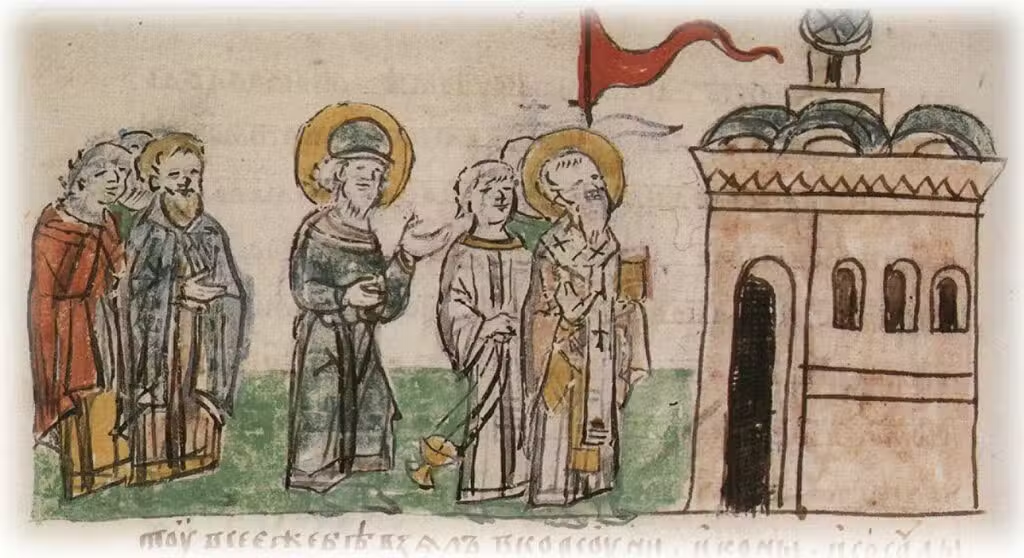
What then can be said of princes and their warriors — if even at the dawn of Christian Rus’ we find a priest, Anastas of Korsun1, directly involved in war? He was a native of Chersonesus, though historians remain divided: was he of Rus’ or Greek, a priest at all or not? As in many other cases, the surviving sources provide too little information for clear answers.
Anastas aided Volodymyr the pagan in capturing Chersonesus, thus paving the way for the great prince of Kyiv to become Volodymyr-Basil the Equal-to-the-Apostles — one of the most powerful rulers of Europe in his time.
I will not dwell on how the people of Chersonesus perceived Anastas’s actions — that is self-evident. Let me stress something else: Christianity did not abolish war. Recall the words of Jesus: “Do not think that I have come to bring peace on the earth. I did not come to bring peace, but a sword” (Mt 10:34). What Christianity did do was establish clear moral criteria — for everything and for everyone. The real question is how Christians themselves understood and lived by those standards.
And here lies the problem: the Christian teaching that warriors are called to defend the good — not to crush the enemy without restraint (the opposite extreme being absolute nonresistance) — has often been forgotten. This is why the cry “God is with us!” has been heard both from genuine defenders and from destructive aggressors2. The reasons for this are many. They are mundane, but at their root lies a simple fact: evil exists.
Aggressors, of course, also read the Holy Scriptures and even quote them. They know, for instance, that in the battle of Rephidim described in Exodus 17:8–13, Moses brought victory to the Israelites by holding his hands aloft (in the posture of the Orans), with “the rod of God” in one hand. They know that after the battle the Lord commanded Moses to record it in a book, and at the same time to impress upon the heart of Joshua that He would wipe out “the memory of Amalek from under heaven.” Then, having built an altar, Moses declared: “Because a hand was raised against the throne of the Lord, the Lord will wage war against Amalek from generation to generation.”
Yet — and this is crucial, for it shows the relapse into a magical pagan mindset — the aggressors overlook the fact that it was not Moses who won Israel’s victory by raising his hands and somehow forcing God’s hand. It was God who gave the victory. He instructed Moses to act in that way so that the Israelites, while fighting their enemy, would see a visible sign of the promised triumph and understand that simply relying on God’s promise without action would be to put Him to the test. The right path was for Moses to pray while Joshua and the army fought. Aggressors, however, often try to make God a hostage to their own “hand-lifting magic” where God has given no such command. “The Lord will wage war against Amalek from generation to generation” continues not because someone dons vestments and raises hands like Moses (God does not punish actors), but because Amalek opposes God. To invoke the Lord’s name in vain is a sin, a violation of the Second Commandment.
Later in history, the roles of the one praying for victory and the one bearing the sword continued side by side, sometimes even in close alliance — as with warrior-prelates such as the bishop of Lviv, Joseph Shumliansky, or the archimandrite of Mukachevo, Joseph Hodermarsky, as well as crusading monks. But never and nowhere did the two roles become one.
War, after all, has been a frequent occurrence in human history, and historians have long noted that there have been more years with wars than years without them. Yet war is not the norm — it is a departure from it. The norm is peace. Eternal and just peace will reign in the Kingdom of Heaven, but here on earth, as the Church teaches, we are called to lay its lasting foundations. This building is also a struggle, sometimes an armed one, but it must always be just.
Thus, in Christianity there are saints regarded as patrons of warriors, but in truth they are holy models for warriors — examples of how to unite Christian virtues with the duty of the sword, with the defense of the good. Among these, especially honored in Ukraine, are the Archangel Michael — leader of the heavenly hosts — and George the Dragon-Slayer. It is no coincidence that so many churches are dedicated in their honor. It is no coincidence that they appear on coats of arms — and Michael is depicted on the coat of arms of Kyiv itself.
At the same time, the lives of the holy warrior saints remind us that men of arms attain holiness not only through feats of battle. Holding a sword (or a rifle, a grenade, and so forth) does not release a soldier from the rest of his Christian obligations. On the contrary, these lives make clear the principle that a warrior’s calling is to stand at the very front line of the struggle against evil, for “No one has greater love than this: to lay down one’s life for one’s friends” (John 15:13). They also point to the importance of belonging within the broader fabric of society. One example is Saint Martin, a Roman officer of the fourth century, who became renowned for his charity. It is widely known that he cut his soldier’s cloak in half and gave it to a beggar; later he dreamt of Christ wearing that same half of the cloak and declaring before the angels that it was Martin who had clothed Him in His need. Martin — whose father, himself a legionary, had named him after the Roman god of war Mars — is regarded as the founder of Christian chaplaincy.
Or let us take the example of our own warriors. (For the princes of Rus’ were, by definition, a class of warriors and rulers, and only some later became monks by vocation.) Borys and Hlib were slain in 1015, according to the Chronicle, by their brother Sviatopolk. Borys was a warrior returning from a campaign against the Pechenegs, to which his father, Prince Volodymyr, had sent him. On the way, he learned that his father had died and that Sviatopolk had seized the throne. Borys resisted the temptation to shed his brother’s blood, choosing instead to die rather than plunge the land into civil war. Before his death, the Chronicle says, Borys sang matins and psalms. Soon after, the young prince Hlib was murdered as well; he prayed through tears: “It would be better for me to die with my brother than to live in this deceitful world,” we read in the Chronicle3. Strikingly, to emphasize the enormity of Sviatopolk’s crime, the chronicler notes that he acted “with Cain’s intent.” For these Cain-like deeds Sviatopolk was called “Cain-marked.” Borys and Hlib, on the other hand, were canonized in 1072 and became the heavenly patrons of the Rurikid dynasty. It must be said, however, that even in their own time people did not always follow the example of Borys and Hlib, despite their official recognition as saints. Metropolitans of Kyiv and other moral authorities often became both participants in and hostages to political turmoil — figures such as Metropolitans Hilarion and Clement Smolyatych, Bishops Zhydata4 and Cyril of Turov, Artemii of Halych, and Abbot Theodosius of the Caves. That same Anastas of Korsun, whom Volodymyr had appointed priest of the Church of the Dormition of the Mother of God (the so-called Tithe Church), defected to the Polish king Bolesław the Brave during his occupation of Kyiv. The last we hear of Anastas is that he fled to Poland with the king.
Now let us turn to the stories of Hilarion of Kyiv and Luke Zhydiata. Both of them promoted a deep inculturation of Christianity into the culture of Rus’, and at the same time worked toward freeing the Rus’ Church from dependence on Constantinople. Let us approach them now by taking a retrospective path.
It is no secret that Hilarion — the first Rus’-born metropolitan and the author of the Sermon on Law and Grace, a programmatic declaration of Rus’ independence and equality with other nations — remains strikingly relevant even today. Much of what Hilarion articulated and preserved in writing continues to resonate. In 1051, with the support of Yaroslav the Wise, Hilarion was appointed to the metropolitan see of Kyiv by conciliar decision, a sign of the Kyivan Church’s growing maturity. The Greeks, however, had long ensured that only Greeks or their trusted protégés could become metropolitans within the Patriarchate of Constantinople. Hilarion, working in close partnership with Yaroslav, blazed like a meteor across the horizon. Yet after Yaroslav’s death in 1054, he was forced to relinquish his see, even though the Patriarch had already confirmed him. He was replaced by a Greek, Ephraim. The reasons were complex, not least because of war. To understand them, we must look back two decades earlier, to another episode of Yaroslav’s church policy.
In 1036 Yaroslav’s eldest son and heir apparent, Volodymyr, became prince of Novgorod. Just as Yaroslav had the companionship of Hilarion in Kyiv, so Volodymyr in Novgorod had the guidance of Bishop Zhydiata, whom his father had appointed. Zhydiata represented the interests of the Kyivan Church, and his presence in Novgorod prevented the appointment of the Greek Ephraim, who spoke for Byzantine interests. In 1043, at his father’s command, Volodymyr led a campaign against Constantinople, which ended in failure. In 1052, at the age of thirty-two, Volodymyr died in Novgorod and was buried in the Cathedral of Holy Wisdom, which he had built together with Bishop Zhydiata5 It was at this point that the story of Hilarion, already familiar to us, took shape. In this way, high politics and war decisively shaped the life of the Church in the eleventh century. And even this is not the whole story.
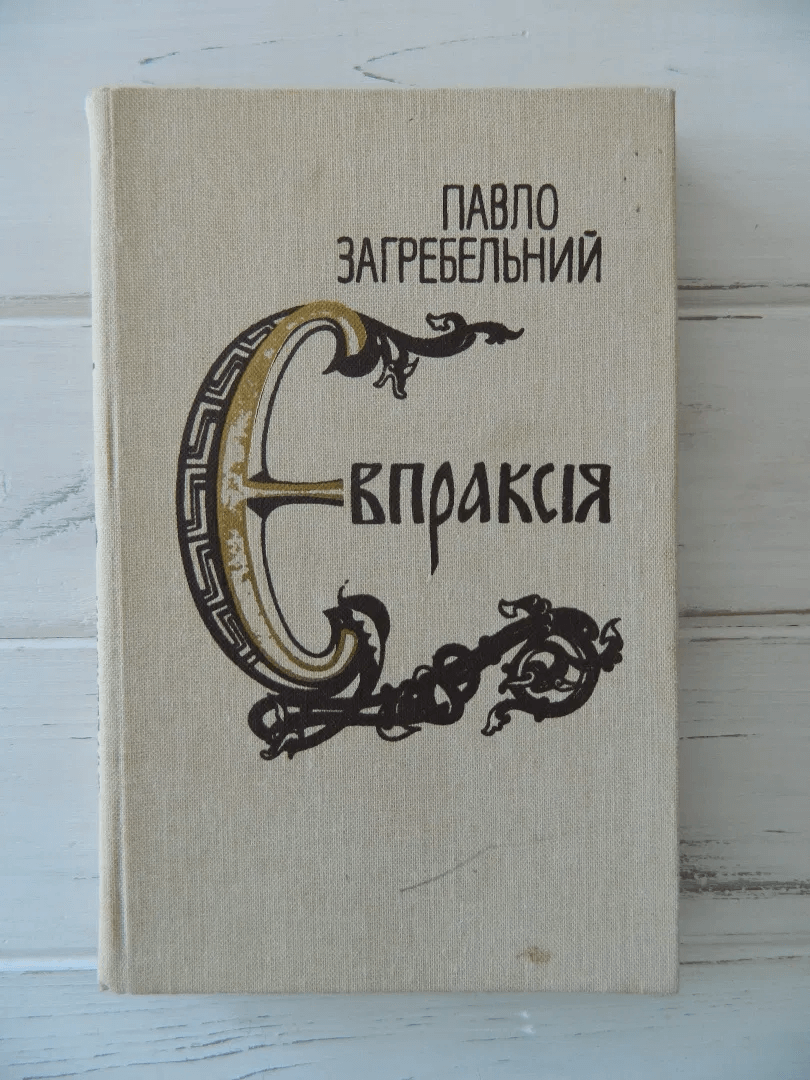
From our school history lessons we recall Emperor Henry IV of the Holy Roman Empire walking to Canossa in January 1077 during his conflict with Pope Gregory VII. The struggle over the right to nominate and appoint abbots (archimandrites) and bishops was so fierce that it repeatedly erupted into open war. The phrase “to go to Canossa,” meaning “to repent” or “to ask forgiveness without conditions,” entered the language as a proverb. Far fewer Ukrainians, however, know that in 1093, fleeing the brutality of that same Henry IV, his wife Eupraxia — the sister of Grand Prince Volodymyr Monomakh of Kyiv — sought refuge with the Pope at Canossa. This episode remains little known, though Pavlo Zahrebelnyi wrote a novel titled Eupraxia about it in 1975. The princess later returned to Kyiv and entered a monastery.
And only medieval historians are aware that three years before Henry’s Canossa — that is, in 1073 — a similar episode unfolded in Kyiv. At that time two brothers, Princes Sviatoslav and Vsevolod Yaroslavich, drove their elder brother Iziaslav from the grand princely throne of Kyiv by force of arms — in other words, by war. Sviatoslav, as a result, seized the throne — what we would now call usurping power — and sought to act as a fully legitimate grand prince, even founding the Cathedral of the Dormition of the Mother of God of the Kyiv-Pechersk Monastery. Yet against him stood Saint Theodosius of the Caves, calling upon Sviatoslav to return the throne peacefully to its rightful ruler. As we read in the Kyiv-Pechersk Paterikon: “What can our anger against your power achieve, good lord? But it is for us to reprove you and to guide you toward the salvation of your soul. And it is for you to listen!”6 Iziaslav at that time sought aid in vain from the Polish king Bolesław and from Emperor Henry IV — the latter, incidentally, was bribed by Sviatoslav and Vsevolod. Only the pope in Rome, as Theodosius did in Kyiv, came to Iziaslav’s defense, even going so far as to crown his son Yaropolk. In the end, Iziaslav was reconciled with his brothers, returned to the grand princely throne in 1077, and the following year fell in battle near Chernihiv, defending Vsevolod against the “outcast princes.” Theodosius did not live to see this, for he passed into eternity in 1074. It is noteworthy that Vsevolod, who became grand prince after Iziaslav, helped ensure that in 1091 the bishop of Pereiaslav, Ephraim, was chosen as metropolitan of Kyiv. A common view is that he was the second Rus’-born metropolitan after Hilarion, though this cannot be confirmed. This man had been very close to Iziaslav, serving as his treasurer and as steward of the princely household.
As we see, the clergy, who held great authority in Rus’, could and indeed did speak out, issuing calls and involving themselves in politics (as politics could exist in the eleventh century), already in the first century after the Baptism of Volodymyr. Bishops and metropolitans at that time were spiritual allies of the princes, acted under their protection, and shared in their successes and failures. To complete the picture of the three sons of Yaroslav — Iziaslav, Sviatoslav, and Vsevolod — in view of the theme of this text, it is worth recalling one more story involving them.
Throughout the centuries of our history, the most solemn oath was the one sworn on the Cross or on the Holy Scriptures. In the medieval chronicles we often encounter the note that princes, having concluded some solemn agreement, would “kiss the holy Cross,” calling upon God to be witness to their oath. Thus, in 1067, when Vseslav Bryachislavich, prince of Polotsk, attacked the Yaroslavichi, they undertook a defensive, just war. When negotiations began, the three brothers summoned Vseslav to them, promised him safety, and “kissed the holy Cross.” The Polotsk prince trusted them, but the Yaroslavichi, breaking their oath, imprisoned him. In 1068 Iziaslav lost the battle on the Alta River against the Polovtsians, the people of Kyiv rose against him, and he fled to Poland. Vseslav, meanwhile, was released from prison and for a time occupied the grand princely throne. The chronicler saw the cause of the grand prince’s misfortunes precisely in the breaking of that oath: “And God showed the power of the Cross, for the instruction of the land of Rus’: let them not transgress the holy Cross once they have kissed it. And if anyone does transgress, he will suffer punishment here and in the age to come eternal torment, for great indeed is the power of the Cross.”
Few outside the circle of medieval historians know that three years before Henry’s famous penance at Canossa — in 1073 — a strikingly similar episode unfolded in Kyiv. That year, two brothers, Princes Sviatoslav and Vsevolod Yaroslavich, drove their elder brother Iziaslav from the grand princely throne by force of arms. Sviatoslav seized the throne — in today’s terms, usurping power — and sought to present himself as the rightful ruler, even founding the Cathedral of the Dormition at the Kyiv-Pechersk Monastery. Standing against him, however, was Saint Theodosius of the Caves, who urged Sviatoslav to return the throne peacefully to its legitimate owner. As the Kyiv-Pechersk Paterikon records: “What can our anger against your power achieve, good lord? Our task is to reprove you and guide you toward the salvation of your soul. Yours is to listen!”
At that time Iziaslav sought help in vain from the Polish king Bolesław and from Emperor Henry IV — the latter, as it happens, was bribed by Sviatoslav and Vsevolod. Only the pope in Rome, echoing Theodosius in Kyiv, took Iziaslav’s side, even going so far as to crown his son Yaropolk. Eventually Iziaslav was reconciled with his brothers, regained the grand princely throne in 1077, and the next year fell in battle near Chernihiv, defending Vsevolod against the “outcast princes.” Theodosius did not live to see this, for he died in 1074. It is also worth noting that Vsevolod, who succeeded Iziaslav as grand prince, helped secure the election in 1091 of Ephraim, bishop of Pereiaslav, as metropolitan of Kyiv. Tradition holds that he was the second Rus’-born metropolitan after Hilarion, though this remains uncertain. Ephraim had been a close associate of Iziaslav, serving as his treasurer and steward of the princely household.
This episode shows that the clergy, who wielded great authority in Rus’, did not hesitate to speak out — issuing rebukes and involving themselves in politics (as it might have been in the eleventh century)— already in the first century after the Baptism of Volodymyr. Bishops and metropolitans were then the princes’ spiritual allies, sharing their protection, fortunes, and misfortunes. To complete the picture of Yaroslav’s three sons — Iziaslav, Sviatoslav, and Vsevolod — in light of this theme, it is worth recalling one more story.
For centuries, the most binding oath in our history was the one sworn on the Cross or on the Holy Scriptures. Medieval chronicles often note that when princes concluded a solemn agreement, they would “kiss the holy Cross,” calling on God as witness. In 1067, for example, when Vseslav Bryachislavich, prince of Polotsk, attacked the Yaroslavichi, they waged what they regarded as a just defensive war. During negotiations, the three brothers summoned Vseslav, promised him safety, and “kissed the holy Cross.” Trusting their oath, the Polotsk prince came — but they broke their word and threw him into prison.
The next year, Iziaslav was defeated by the Polovtsians at the Alta River, the people of Kyiv rose against him, and he fled to Poland. Vseslav was freed from prison and for a time occupied the grand princely throne. The chronicler traced Iziaslav’s misfortunes directly to the broken oath: “And God showed the power of the Cross, for the instruction of the land of Rus’: let them not transgress the holy Cross once they have kissed it. And if anyone does, he will suffer punishment here and in the age to come eternal torment, for great indeed is the power of the Cross.”
This is how the monk-scribe understood the situation. Even so, some members of the political elite of Rus’ — the princes — did not think in such deeply religious terms, nor did they care enough about virtue to set aside realpolitik. As a result, oaths sworn on the Cross continued to be broken. Still, it is important to note that such violations were always regarded as a deviation, a betrayal.
In 1097 the princes, seeking to end civil strife and unite in the struggle against the Polovtsians, convened a special assembly at Liubech. There they declared, as the chronicle records: “Why do we destroy the Rus’ land, stirring up quarrels among ourselves? Meanwhile the Polovtsians ravage our land and rejoice that war endures among us to this day. From now on, let us be of one heart and protect the Rus’ land. Each shall hold his patrimony… And upon this they kissed the Cross: ‘And if from this day anyone rises against another, then we shall all be against him, and the honorable Cross as well.’ And they all said: ‘Let the honorable Cross and all the land of Rus’ be against him.’” Yet for some of the participants, as events soon proved, these were only fine words.
Not long after the council, one of its members — Vasylko Rostyslavych, prince of Terebovlia — was seized and blinded by conspirators led by two other signatories of the assembly: Sviatopolk II Iziaslavych, the grand prince of Kyiv, and Davyd Ihorovych, the prince of Volhynia. When Vasylko was thrown into prison, abbots pleaded for him before the grand prince — yet another example that the clergy possessed both the right and the courage to admonish princes, for they too had kissed the Cross! But Sviatopolk and Davyd refused to listen and carried out their dark deed.
The role the conspirators assigned to the clergy in matters of war and peace is revealed in one telling episode. When they brought the bloodied and blinded Vasylko to the town of Zdvyzhen (perhaps present-day Brusyliv), “they stood with him in the marketplace, and having stripped from him his bloody shirt, they gave it to the priest’s wife to wash. And the priest’s wife, after washing it, put it back on him while they dined, and she began to weep. And he was as one dead.” The message was clear: here is your victim — tend to him, and remain silent.
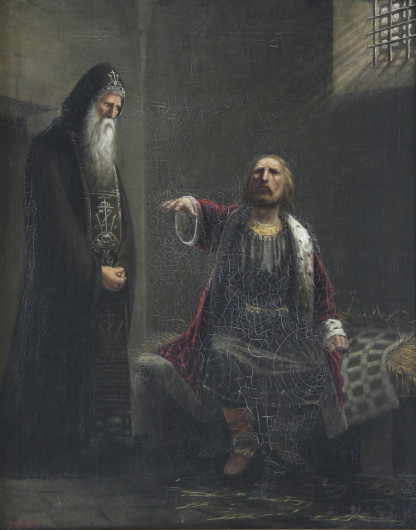
The outraged princes, led by Volodymyr Vsevolodovych Monomakh, eventually compelled Sviatopolk to punish the instigator Davyd, and Vasylko was restored to his principality of Terebovlia. At that moment the danger of a war of “all against all” was very real, and it was avoided only through the sober judgment of Vasylko himself, who pleaded that no bloodbath be unleashed; through the intercession of Metropolitan Mykola of Kyiv and the widow of the previous grand prince; and through the prudence and authority of Monomakh. The tale of Vasylko’s blinding, written as a moral and cautionary account by Vasyl the Volhynian — a companion of the blinded prince (whom some scholars identify as a priest and perhaps a monk) — has resounded for nearly a thousand years as one of the most powerful condemnations of fratricidal war in our history. It is worth recalling, too, another of Davyd’s victims: Sviatoslav Davydovych, prince of Lutsk and son-in-law of Sviatopolk II. After his expulsion, Sviatoslav — both a prince and a warrior — returned to his father in Chernihiv. In 1106 he took monastic vows, becoming known as Mykola Sviatosha, the founder of the “hospital monastery” with its infirmary, later venerated as a saint.
Moving into the twelfth century, we again encounter striking figures within the Church hierarchy who openly took political positions. The first is Metropolitan Klym Smoliatych of Kyiv, who was elevated to the metropolitan throne with the backing of Prince Iziaslav II Mstyslavych, without Constantinople’s approval. Klym’s case is significant not only because he embodied Rus’ persistent aspiration to free its Church from dependence on Constantinople. When, in 1149, Iziaslav II was driven from Kyiv by his uncle Yurii Dolgorukii (son of Volodymyr Monomakh) and fled to Volodymyr-in-Volhynia, Klym was forced into exile with him. Later he returned alongside the prince, but in 1155 Yurii again captured Kyiv, installed the Greek metropolitan Konstantinos, and ruled until his death in 1157 — widely believed to have been by poisoning at the hands of the Kyivans. Klym, however, chose not to return to the city.
Another infamous episode soon followed. On the second Wednesday of Great Lent in 1169, the army of Yurii Dolgorukii’s son Andrii Boholiubskyi, together with his allies, sacked and burned Kyiv, looting its monasteries and churches — including the Church of the Tithes and Holy Sophia. Andrii had no desire to reign in the capital of Rus’7. Of course, this was neither the first nor the last military assault on Kyiv, but it became the cornerstone of the later Muscovite, and then Russian, historical myth that the so-called “Great Russian” people were born already in those times. In reality, Andrii was building his own power center in the Zalissia region, with its capital at Vladimir-on-Klyazma, much as other princes of the period did in their own territories. He sought to consolidate his secular power by creating a separate Vladimir-Suzdal metropolitanate, independent of Kyiv. Both princes and clergy opposed the plan. From that struggle we have a surviving work by Bishop Kyrylo of Turov — an artifact of the conflict, as the historian of literature Archbishop Ihor Isichenko has observed.
“The intrigues of Andrii ‘Boholiubskyi’ and of Bishop Feodor [of Ryazan], aimed at detaching the Vladimir-Suzdal metropolitanate, provided the impetus for the writing of what is perhaps Kyrylo’s most famous work — ‘A Parable about the Human Soul, the Body, the Transgression of God’s Commandments, the Resurrection of the Human Body, the Coming Judgment, and Torment,’” writes Archbishop Ihor in the introduction to the modern edition of Kyrylo’s works. Kyrylo’s words about Feodor are striking not only as one hierarch’s judgment on another, but as an expression of the broader Christian ethos of Rus’. As we read in this Parable:
“Thus there entered, as a churchman, one unworthy of the priesthood, who concealed his sin, who paid no heed to God’s law, but for the sake of a high name and a glorious life ascended to the episcopal rank. […] If we have no good deeds, nor repentance for sin, then whatever rank we hold, we are far from God. For the Lord is near to those who are contrite of heart; He saves the humble in spirit, and He fulfills the will of those who fear Him.”8.
Bishop Feodor justified Andrii Boholiubskyi’s aggression just as, eight and a half centuries later, Patriarch Kirill justifies another Russian war of aggression against Ukraine. Both dared to lift their hands toward the Lord. Both ignored the truth: “The Lord will be at war with Amalek from generation to generation”; for “If we have no good deeds, nor repentance for sin, then whatever rank we hold, we are far from God.”
Volodymyr Moroz, historian
- As a priest, Anastas begins to be mentioned only in the fifteenth-century Novgorodian chronicles, as medievalist Vadym Aristov has pointed out to me. I would like to express my gratitude to him for reading this article and for a number of remarks and suggestions that have helped to improve the text.
- See: Mykhailo Hevko, Mobilizovanyi Boh [Mobilized God], Patriiarkhat 3 (2024).
- Unless otherwise indicated, quotations are cited from: Litopys rus’kyi, after the Hypatian Codex, trans. Leonid Makhnovets. Kyiv, 1989.
- Beginning with the fifteenth-century Novgorodian chronicles, he came to be called Luka Zhidiata, with the addition of a personal name.
- In the fifteenth century, Novgorodian chronicle writing also added to Zhidiata’s story the claim that, after Yaroslav’s death and the deposition of Ilarion, he was slandered and imprisoned, though later released and reinstated. As Vadym Aristov notes, this “addition” is absent in Old Rus’ texts.
- Kievo-Pecherskyi Paterik, trans. from Church Slavonic by Mariia Kashuba and Nadiia Pikulak. Lviv, 2001, pp. 71–72.
- Volodymyr Moroz, “Pershyi velykoros” [The First Velikoros], Ukrainskyi Tyzhden (https://tyzhden.ua/pershyj-velykoros/), 9.VIII.2014.
- Kyrylo of Turov, Molytvy i povchannia [Prayers and Instructions], trans. from Church Slavonic by Dariia Syroid. Lviv, 2021, pp. 150, 153.

