
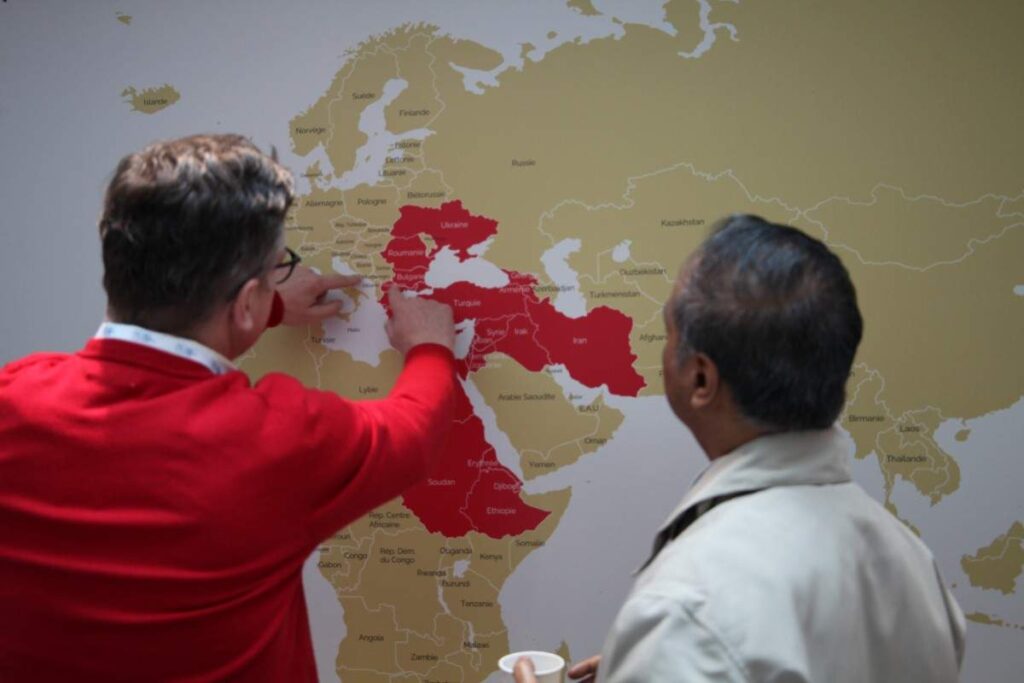
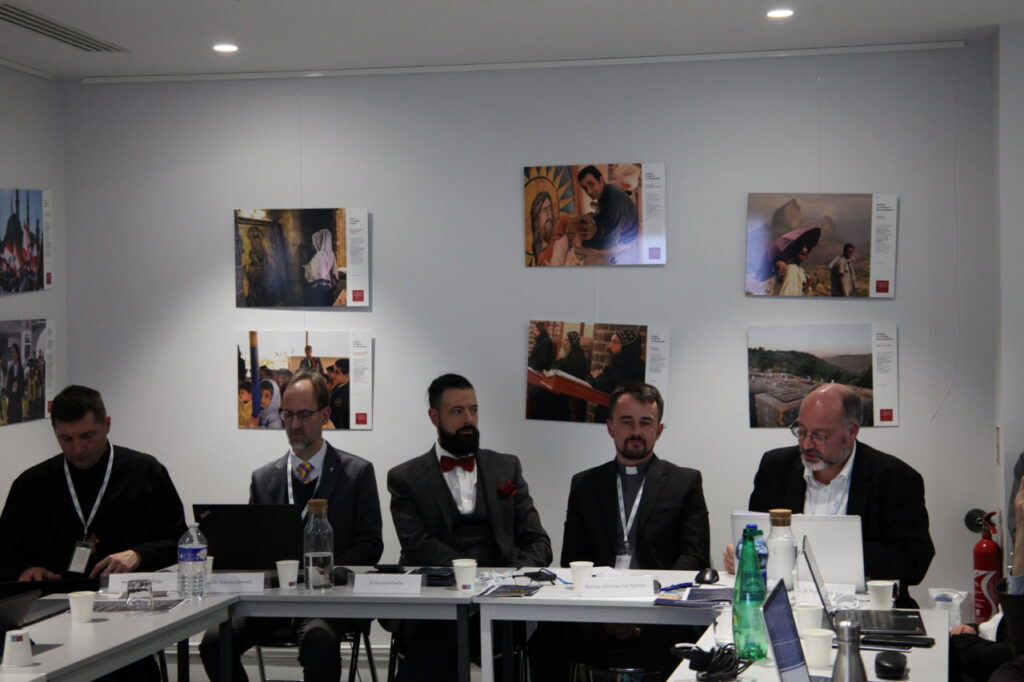
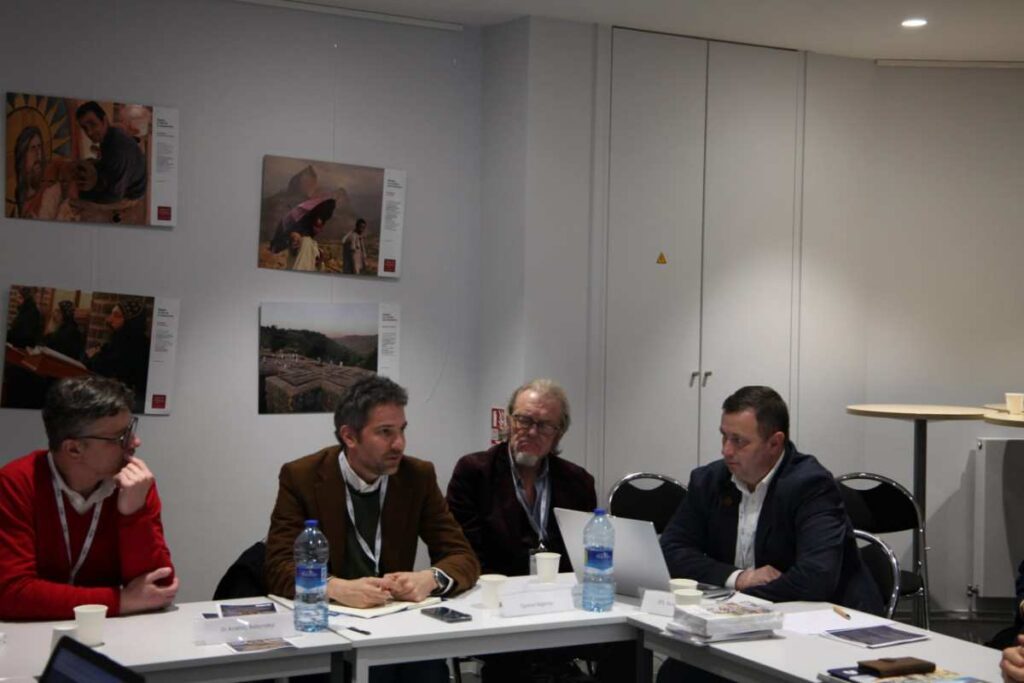
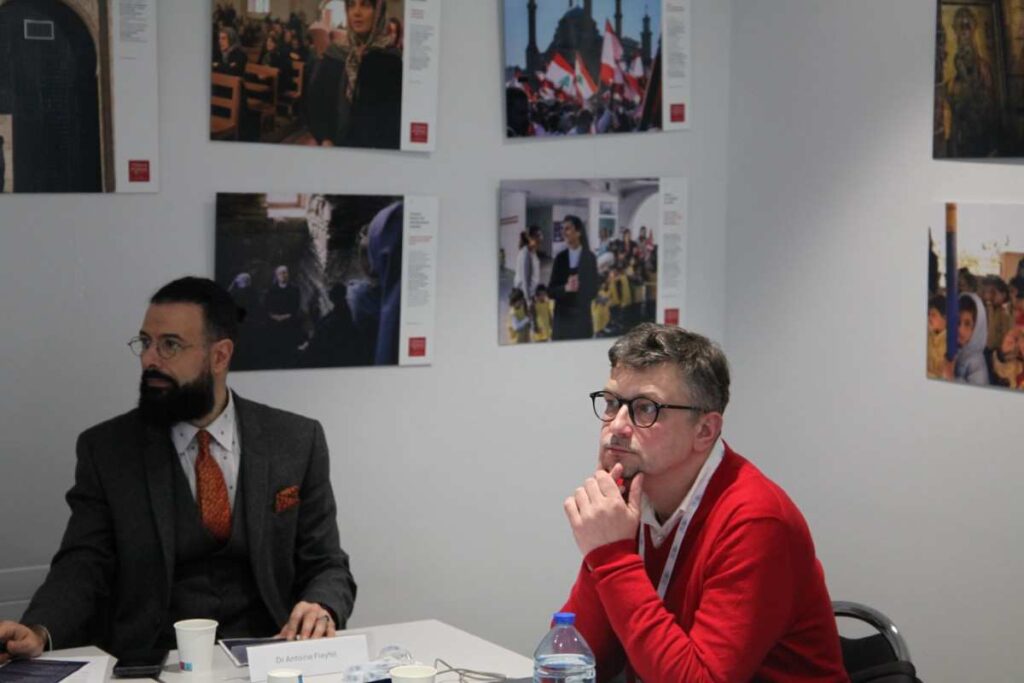
On 3-4 December 2025, Eastern Catholics gathered in Paris to share experiences of how to preserve and develop their ecclesial identity under unfavorable conditions. The conference was organized by the Institute of Ecumenical Studies of the Ukrainian Catholic University in cooperation with the Institut chrétiens d’Orient.
Sixteen speakers from various countries engaged around several key thematic blocks: the identity of the Eastern Catholic Churches; the life and challenges of the Eastern Catholic Churches in the diaspora; the service of these Churches to other Christian communities and to wider society; their relationship with Rome; and contemporary challenges and prospects for the development of liturgical life.
The conference was held with the support of l’Œuvre d’Orient. Opening remarks were delivered by Mgr Hugo de Woillemont, Director of l’Œuvre d’Orient; Bishop Hlib Lonchyna, Apostolic Administrator of the Eparchy of Saint Volodymyr the Great in Paris; Fr. Roman Fihas, Director of the Institute of Ecumenical Studies; and Prof. Antoine Fleyfel, Director of the Institut chrétiens d’Orient.
We present here a summary of the main ideas expressed at the conference.
Identity of the Eastern Catholic Churches
In his paper “At the Dawn of the Third Century of the Melkite Greek Catholic Church: Melkite Identity as an Identity of Tension?”, Fr. Dr. Charbel Maalouf emphasizes a principle that is important for all Churches: at the foundation of ecclesial identity lies neither ethnicity, nor fidelity to established forms, nor institutional self-sufficiency, but the paschal logic of the Christian faith – life that passes through death to resurrection and therefore is not afraid of death.
Accordingly, ecclesial identity cannot be reduced to self-preservation. It must possess an inner freedom to relinquish what closes off its horizon – rigid boundaries, self-enclosure, the absolutization of the past – in order to remain faithful to Christ. Read in this way, the “Melkite” does not appear as an exception, but as a concrete example of a general rule: by its very nature, the identity of the Church is paschal.
This theological vision of the Church’s paschal identity leads directly into the context of Dr. Antoine Fleyfel’s paper, “Between Homeland and Exile: The Identity of the Eastern Churches Tested by Dispersion.” Antoine Fleyfel shows how, after 2011, this paschal logic has been embodied in the dramatic living conditions of Middle Eastern Christians, who are experiencing not merely emigration but a radical transformation of the conditions of ecclesial life. The war in Syria, the disintegration of Iraq, Lebanon’s economic collapse, radicalization, mass displacement, and large-scale emigration have, within a short time, fundamentally altered the lives of Middle Eastern Christians.
Models that once provided a sense of stability no longer function. In Syria, this was the state, which promised the integration of all communities into a common national project. In Iraq, it was the logic of “protection” of Christians by the authorities or by powerful political actors. In Lebanon, it was the system of confessional balance, undermined by financial and institutional crisis.
In this situation, the speaker considers understandable the desire of Christians to rely on the protection of the Catholic West. At the same time, he sees this as a potential danger: living under constant external guardianship gradually creates dependency and weakens an inner sense of responsibility. Such an approach erodes ecclesial self-understanding and blurs identity. When familiar political and social supports disappear, ecclesial identity, according to Fleyfel, becomes concentrated in the following forms:
- the parish — as a social nucleus where the community finds support in times of crisis, and where the priest often assumes the role of coordinator of basic social assistance;
- the school — as a fundamental institution through which education transmits an awareness of who this community is, its history, language, and cultural memory;
- the celebration of worship in one’s own rite — as a clear marker of identity both in the homeland and in the diaspora, since it is precisely the Liturgy that first becomes a “portable home” for Christians compelled to live outside their traditional environment.
The diaspora, in Fleyfel’s view, both supports the homeland and seeks ways to translate its own values and meanings into a new context. His main conclusion is that Eastern ecclesial identity is no longer primarily tied to territory. It is formed between homeland and exile and requires a change of approach – from expectations of a “protectorate” to a logic of responsible presence, service, and minority witness.
Coptic Catholics as a concrete example of a Middle Eastern Church today
These general conclusions of Antoine Fleyfel acquire concrete form in the paper by Dr. Christian Cannuyer, “Coptic Catholics: the delicate position of a small minority within the largest Christian community of the Middle East.” The focus is on one of the smallest yet most vulnerable Eastern Catholic communities, whose experience vividly illustrates what ecclesial life looks like without political protection, economic resources, or stable institutional support.
At the end of the nineteenth century, the Apostolic See decided to give institutional form to the Coptic Catholic Patriarchate of Alexandria for a community that in fact numbered only about 5,000 faithful. The Coptic Catholic Church thus became the last Church to be elevated to patriarchal status. As the speaker emphasizes, this was less a recognition of a long-established ecclesial reality than the creation of an institution “from above,” within a complex social and confessional context.
Today, the number of Coptic Catholics is estimated at between 250,000 and 400,000. This represents less than 0.4% of Egypt’s population and only 1–1.5% of the entire Coptic Christian community. The clergy numbers up to 200 priests, and since the 1950s the number of faithful has grown very little. Geographically, this Church is concentrated primarily in poor and socially marginalized Upper Egypt, where there are entire villages with an almost exclusively Coptic Catholic population. What emerges here is a distinctly rural form of Christianity.
Historically, the development of this community took place through schools: first an educational institution was established, around which a community gradually formed, and only later did parish life begin. For a long time, liturgical services were celebrated in private homes. Today, almost the entire clergy – especially those from Upper Egypt – receive their initial formation in local seminaries, after which they study in Rome and then return home. For this reason, these priests are sometimes called “the little Phoenicians of Egypt.” They are perhaps the only group of indigenous Egyptian intellectuals who, on a large scale, obtain education abroad and consciously return to serve within their own milieu.
Living conditions for priests – and in some cases even for bishops – in the villages of Upper Egypt are extremely difficult. Their faithful are, as the saying goes, the poorest among the poor. In such a context, the priest becomes the principal social intermediary in relations with the police, courts, local administration, and Islamist environments, effectively serving as the defender and spokesperson of the community.
After the mass expulsion in the 1960s of Levantine, Syrian, Latin, and Greek Catholics, Coptic Catholics remained the only relatively large Catholic community in Egypt. At the same time, they experience a profound identity trauma: the Apostolic See is increasingly distancing itself from the legacy of the unions and more frequently conducts ecumenical dialogue directly with the Coptic Orthodox Church, effectively bypassing Coptic Catholics as a full ecclesial subject.
Since the 1990s, regions with a high concentration of Coptic Catholics have been among those most affected by terrorist violence. Despite this, the community has consistently sought to maintain humane and respectful relations with its Muslim surroundings – often more consistently than the Coptic Orthodox milieu. According to the speaker, it was precisely Coptic Catholics who played an important role in preparing the Document on Human Fraternity, signed by the Grand Imam of al-Azhar.
In conclusion, Dr. Cannuyer portrays a community with a clear yet extremely fragile identity – a Church that possesses neither numerical strength, nor political protection, nor economic resources, yet continues to struggle for survival, to bear witness, and to serve under the constant threat of disappearance.
It is precisely at this point that the Middle Eastern experience opens onto a broader perspective: Eastern Catholics find themselves in a minority position not only in their historical homelands, but also within the context of the diaspora. However, while in the Middle East minority status is the result of historical and political ruptures, in Europe it is the consequence of migration and dispersion. This transition from “place” to “dispersion” shaped the thematic logic of the next section of the conference, devoted to the diaspora.
Challenges of the existence of the Eastern Catholic Churches in Europe
When the Eastern Catholic Churches find themselves in European countries, they immediately face the question of how to exist in an environment where the entire religious infrastructure is built around the Latin rite. In their homelands, they possess their own territories, their own structures, and a clear system of governance. In Europe, however, their life is shaped at the intersection of several different levels of authority and responsibility: the mother Church, local Latin bishops, the Holy See, and state laws. In such a situation, the Eastern Churches cannot always function as “ordinary” territorial dioceses, but are compelled to exist within hybrid canonical models, in which the constant search for balance becomes part of their daily experience.
Bishop Ihor Rantsya (at the time of the paper, bishop-elect — Ed.) vividly illustrated how such a hybrid model operates in practice in his presentation, “The Status of Diaspora Structures of the Eastern Catholic Churches, Using the Ukrainian Eparchy of Saint Volodymyr the Great in Paris as an Example: Challenges for Canon Law, Ecclesiology, Liturgical Identity, and Ecclesial Mission.” Taking as his example the Paris Eparchy of the Ukrainian Greek Catholic Church, which he heads, he explained that this eparchy is, on the one hand, a fully-fledged Eastern structure, with its own bishop and internal law, and on the other hand, integrated into the ecclesial system of France and participating in the life of the French Bishops’ Conference. In other words, the Church simultaneously enjoys autonomy and is an integral part of the local Catholic milieu.
A particular complexity concerns territory: formally, the Paris Eparchy covers the whole of France, but in practice it also serves Ukrainians in Belgium, the Netherlands, Luxembourg, and Switzerland. In these countries, the bishop no longer functions as an ordinary diocesan bishop, but acts in the status of an apostolic delegate, that is, as a representative of the Holy See and of the mother Church. This creates a situation in which a single institution operates simultaneously under two different legal regimes, which automatically complicates judicial matters, administrative procedures, and the overall governance of the eparchy.
Bishop Rantsya offers a concrete example of a pastoral problem that the Paris Eparchy has encountered without a ready-made canonical solution: does the tribunal in Paris have the right to examine marriage cases of UGCC faithful who reside in Belgium or the Netherlands? The problem lies in the gap between canonical jurisdiction, which is limited to the territory of France, and the real pastoral responsibility of the eparchy, which extends to other countries as well. As a result, such issues often have to be resolved on a case-by-case basis.
Moreover, a solution that works in one country may not function in another, as illustrated by the models of Austria and Germany presented by the subsequent speakers.
The situation of the Eastern Catholic Churches in Germany
In the paper by Rev. Dr. Thomas Kremer, “In Search of Identity between Preservation, Assimilation, and Bureaucratic Obstacles: the Special Situation of the Eastern Catholic Churches in Germany,” Germany was presented as a paradoxical example: within a single system, there is a noticeable institutional development of the Ukrainian Greek Catholic Church alongside the structural vulnerability of all Eastern Catholic Churches, including the UGCC, at the financial level.
On the one hand, the Ukrainian Greek Catholic Church (UGCC) operates successfully in Germany within the structure of an exarchate: nearly 85 communities and about 40 priests, most of whom speak German, have experience of ministry in local parishes, and at the same time preserve the Eastern tradition. Bishop Bohdan Dziurakh – Apostolic Exarch of Germany and Scandinavia – has become a visible and influential figure in the German ecclesial environment, and UGCC priests take an active part in public and social life. This demonstrates the dynamic development of the exarchate and its consolidation as a structure integrated into German society.
Alongside this success, however, according to Kremer, there exists a fundamental structural problem affecting both the UGCC and the other Eastern Churches that do not have their own exarchate. The German church tax system recognizes only one category: “Catholic,” which in practice means “Latin Catholic.” As a result, all Eastern Catholics – Ukrainians, Syriacs, Chaldeans, Maronites:
- pay church tax to Latin dioceses;
- the faithful of the UGCC do not finance their exarchate directly;
- the Eastern Catholic Churches have no independent financial resources for developing their own structures.
For this reason, every appointment of a priest to an Eastern community requires lengthy and complex negotiations: who will pay for his ministry, which premises will be provided, and what share of the costs will be borne by the Latin diocese. In many cases, Latin bishops block the establishment of new Eastern structures. Kremer stresses that the obstacles here are not theological, but financial and bureaucratic. This creates a palpable inequality. The UGCC, even with an exarchate, lacks financial autonomy, while other Eastern Churches do not even possess their own jurisdiction and are forced to exist within Latin dioceses as “communities of another language/rite.” They are unable to form clergy and governance structures in a stable manner, depending instead on coordinators and ad hoc decisions. In Kremer’s view, such a model does not correspond to the spirit of the Second Vatican Council, which recognized the equality and full ecclesial status of the Eastern Catholic Churches. In the German context, this equality remains more a theoretical principle than a real institutional practice.
The Austrian model: an ordinariate for all Eastern Catholics
In contrast to Germany, Austria applies a different model – a single ordinariate for all Eastern Catholic Churches, regardless of rite or ethnic tradition. Rev. Dr. Thomas Németh presented this model in his paper, “Eastern Catholics in Austria: from Historical Presence in the Habsburg Empire to Contemporary Realities.” An ordinariate is not a diocese in the strict canonical sense; rather, it is a flexible structure designed for situations in which Eastern communities are small, dispersed, and belong to different traditions.
The head of the ordinariate is the Archbishop of Vienna, who is granted special faculties for the pastoral care of all Eastern Catholics in the country. Historically, this model grew out of the presence of Greek Catholics in Vienna, centered around the parish of St. Barbara, and in 2018 it was extended to all Eastern Catholic Churches in Austria.
The ordinariate encompasses all rites – the Byzantine, Syriac, Chaldean, and the Indian traditions. It does not incardinate priests, but coordinates their ministry and sets pastoral priorities. Eastern communities are simultaneously under the responsibility of the ordinariate and within the competence of local Latin bishops. Today, the ordinariate provides pastoral care to approximately 18,000-20,000 Eastern Catholics. The largest groups are Ukrainians, Romanians, and Syro-Malabars. About 35 pastoral centers are active, served by nearly 80 priests of various rites, who often combine ministry in their own rite with service in the Latin rite.
Austria, like Germany, faces challenges of registration and financing: all Catholics are formally registered as Latin. Nevertheless, the existence of the ordinariate creates a single center of responsibility, an institutional “home” for Eastern Catholics, and a model for representing their interests.
Németh’s main conclusion is that the Austrian model does not provide full autonomy, but it is a pragmatic and viable solution. It allows the Eastern Churches to preserve their identity, to develop, and to be visible in their relations with the state and the Latin hierarchy. Unlike the German situation, where each community depends on an individual Latin bishop, Austria has a clear and comprehensible structure of responsibility. At the same time, the very existence of such a structure does not resolve one of the most sensitive issues of diasporic ecclesial life – the question of financial responsibility and dependence. This dimension, which directly affects the Church’s real freedom, its pastoral possibilities, and its self-understanding, was also addressed in the presentation by Bishop Ihor Rantsya.
Bishop Ihor noted that financial issues are also issues of identity. Most diasporic ecclesial structures would not be able to function without systematic material support from Latin dioceses or from Roman Catholic Church funds in the countries where they are located.
At the same time, the mother centers of the Eastern Churches seek to retain full canonical and pastoral control over communities abroad, while expecting Latin institutions to assume the financial burden of their existence. As a result, an internal tension emerges: the structure formally remains “one’s own,” but its material infrastructure is “someone else’s.”
Bishop Rantsya describes this situation as a delicate pastoral and ethical dilemma. On the one hand, assistance should be disinterested and must not turn into an instrument of influence; on the other, those who receive support cannot remain indifferent to or ignore the benefactor. Bishop Ihor noted that half of the priests of the Eparchy of Saint Volodymyr serve simultaneously in two liturgical traditions (they are biritual). Thus, thanks to liturgical birituality, the eparchy is able to function financially while at the same time providing real and tangible assistance to the local Church.
The issues of financial dependence and responsibility raised in this presentation illuminate a broader context of tension between the ecclesial center and diaspora communities. They point to structural challenges faced by Churches operating in different social, cultural, and political environments. It is precisely to this dimension – the relationship between the mother center and transnational ecclesial presence – that the next presentation, devoted to the Armenian experience, is addressed.
The particular Armenian case
In his presentation “Beyond Ethnicity: the Armenian Church as a Transnational Body,” Dr. Tigran Yegavian outlines the Armenian context as an example of a structural rupture between the ecclesial center and the diaspora. The Armenian Apostolic Church, centered on Etchmiadzin, functions within a political and cultural context that differs significantly from the reality of Armenian communities in Western Europe, North America, or the Middle East. This rupture is not only cultural, but above all institutional in nature.
Yegavian draws attention to the fact that the mother Church largely preserves post-Soviet models of governance, lacks sufficient transparency, and shows limited readiness for internal reform. Clergy formed in Armenia often do not command the languages and cultural codes of the diaspora, which renders their ministry ineffective in a Western context. Added to this is the political burden and the legacy of close interaction with state authorities, which undermines trust in the Church among parts of the Armenian diaspora abroad.
Against this background, the Armenian diaspora – particularly in France – has developed a different style of ecclesial life, one that is more open, educated, and responsive to contemporary social expectations. Yet it is precisely this dynamism that intensifies tensions with the center: the diaspora expects reform and dialogue, while Etchmiadzin often acts by inertia or avoids providing a systematic response to these demands. As a result, the conflict ceases to be a matter of cultural differences and becomes a confrontation between two models of ecclesial self-understanding: the Church as a national symbol versus the Church as a modern spiritual institution.
Yegavian also addresses the practical consequences of this crisis. Where official ecclesial structures lose credibility, youth disengagement increases, and the Church itself gradually loses moral authority. In such circumstances, ecclesial structures may formally remain in place, but their pastoral effectiveness is significantly diminished.
Yegavian’s main conclusion is that the tension between the mother Church and the diaspora is not a temporary misunderstanding, but a symptom of a deep crisis of institutional adaptation. If the Church is unable to rethink its models of governance and its mode of presence in the diaspora, communities abroad begin to live their own ecclesial lives – sometimes more dynamic, but marked by an increasing number of misunderstandings with the mother center.
For whom does the diaspora Church exist?
Behind these issues of governance, however, lies an even deeper question: for whom does the diaspora Church exist, and to whom should it orient its pastoral strategy? It is precisely to this dimension of tension – no longer so much institutional as existential and pastoral – that Dr. Anatolii Babynskyi turns in his presentation, “Between Heritage and Horizon: Challenges of Identity and Mission for the Church in the Diaspora.”
In his presentation, he drew attention to another fundamental challenge facing Churches in the diaspora – the impossibility of determining in advance which group of faithful ecclesial strategy should be oriented toward. In his view, no Church in the diaspora can plan its development on the assumption of a stable and predictable community structure. Babynskyi emphasizes that the diasporic ecclesial environment is always multilayered. It simultaneously includes the first waves of emigration, which are already largely integrated into the local socio-cultural context; newly arrived migrants, often traumatized by war or forced displacement and focused on maintaining ties with their country of origin; local residents who come to the Church not for ethnic reasons but through a personal spiritual search; and younger generations for whom the context of the country of residence, rather than the historical homeland, is decisive. Crucially, the proportions among these groups are not fixed. They can change abruptly under the impact of war, economic crises, or new migration waves. In such a situation, any attempt to construct a single long-term linear model of pastoral development is doomed to be out of step with reality.
The speaker underscores the pastoral risk of orienting oneself exclusively toward mission among locals or of preserving the Church primarily as an ethnic community. If a diaspora Church focuses solely on new immigrants, it gradually loses contact with already integrated generations and with youth. If, on the other hand, the main emphasis is placed on locals or those born in the diaspora, the Church ceases to fulfill its original task – accompanying those whom it historically followed into the diaspora and for whom ecclesial structures abroad were created. Hence Babynskyi’s main conclusion: the diaspora Church must remain structurally and pastorally flexible, capable of constantly reviewing and reconfiguring its approaches. It cannot rigidly attach itself either to a model of a closed “community for its own” or to a purely missionary model.
Complementing these reflections on the diaspora and the Church’s mission was the paper by Rev. Dr. Andrii Onuferko, “Pastoral Renewal in the Ukrainian Greek Catholic Church: the Formation of a Culture of Mission.” The speaker emphasized that tensions among different groups of faithful in the diaspora – between different waves of emigration, between integrated generations and newcomers, between those motivated by ethnicity and those who come beyond ethnic boundaries – are not an anomaly, but have accompanied the Church since apostolic times and are always part of the process of discerning the action of the Holy Spirit. Therefore, the only stable foundation remains the Church’s vocation to be a community of the Gospel, the Sacraments, and service. This vision has found practical expression in the development of a global synodal perspective and in the “Living Parish” program, which has proposed a flexible framework for different contexts and understands the parish as an open space for encountering Christ, rather than as a structure serving a particular ethnic group.
Thus, the analysis of the diasporic situation leads not only to conclusions about the need for internal flexibility and pastoral balance, but also opens a broader question about the role of the Eastern Catholic Churches beyond their own communities. When the Church moves beyond internal self-preservation, the question inevitably arises of how and for whom it can be of service within the wider ecclesial and social context. It is precisely to this dimension – the service of the Eastern Catholic Churches for the Other – that the next block of presentations turns.
Eastern Catholic Churches and service to the Other
Mgr. Charbel Maalouf emphasizes that the Melkites can serve Europe in dialogue with Islam, since their identity has from the outset been formed as dialogical. It emerged not from theoretical concepts, but from centuries of coexistence with Islam in concrete historical circumstances.
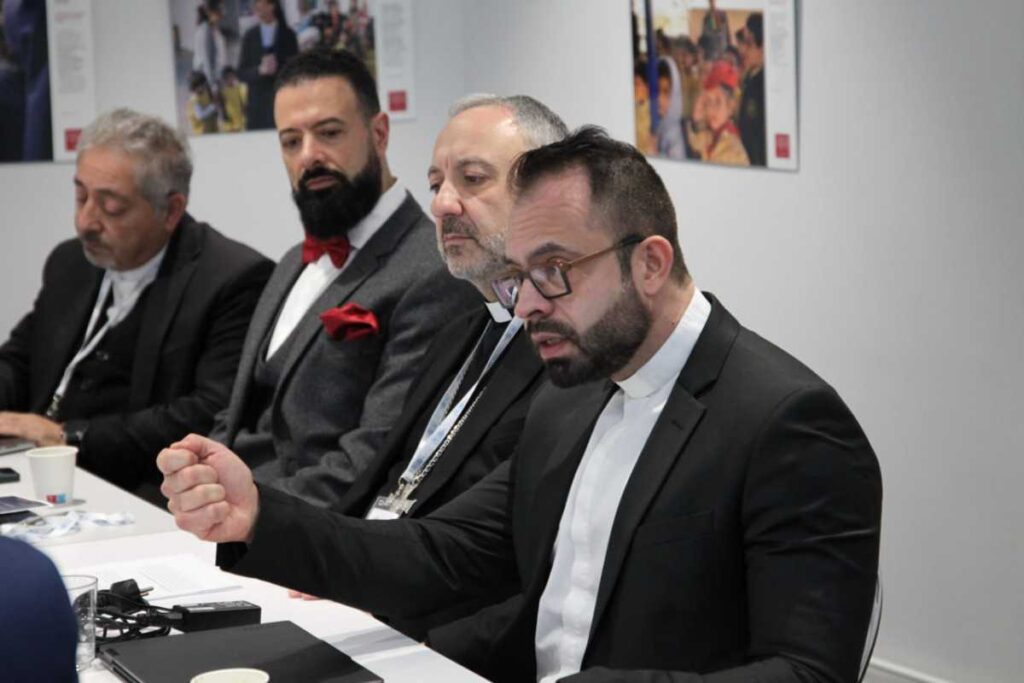
From the seventh century onward, the Christians of Antioch, including the Melkites, lived within a Muslim environment and were active participants in the formation of Arab-Islamic culture: they wrote theology in Arabic, took part in philosophical and religious debates, and reflected on faith within a shared cultural space. This shaped a way of being Christian with the other, rather than against the other.
Fr. Maalouf emphasizes that Melkite identity is neither defensive nor self-dissolving into the other. It is about bearing witness to Christ without denying the faith of the other. For this reason, dialogue with Islam is not an external mission for the Melkites, but an internal form of ecclesial life. This is precisely their service to the West: the Melkite experience shows that it is possible to combine a clear Christian identity with openness and coexistence in a religiously plural society – without fear and without losing oneself.
In his paper “Ecumenism in the Middle East: Toward a Prophetic Vision,” Rev. Dr. Gaby Hashem emphasized that the experience of the Eastern Churches is of particular value for the Western Church in the context of the contemporary synodal process, since for the East synodality has never been a temporary reform, but a customary mode of ecclesial life. For centuries, the Eastern Churches have lived within a patriarchal system in which the patriarch and the synod exist in mutual interdependence, and authority is exercised collegially through discernment and shared responsibility. Fr. Hashem notes that this synodal experience was formed not in conditions of political power or ecclesial dominance, but rather in situations of vulnerability and external pressure. Precisely for this reason, synodality in the East has taken on the character of a spiritual practice of listening, perseverance, and discernment of God’s will amid complex historical circumstances.
Thus, the Eastern synodal experience emerges not only as a historically shaped practice of survival and spiritual discernment, but also as a resource for reflecting on contemporary challenges of ecclesial life. From this experience, rooted in concrete conditions of vulnerability, the discussion turns to the question of how synodality can be rethought and creatively applied in today’s ecclesial context. This is the focus of Dr. Antoine Arjakovsky’s paper, “Proposals of the Synod on Synodality in Relation to the Eastern Catholic Churches: A Call to Creativity.”
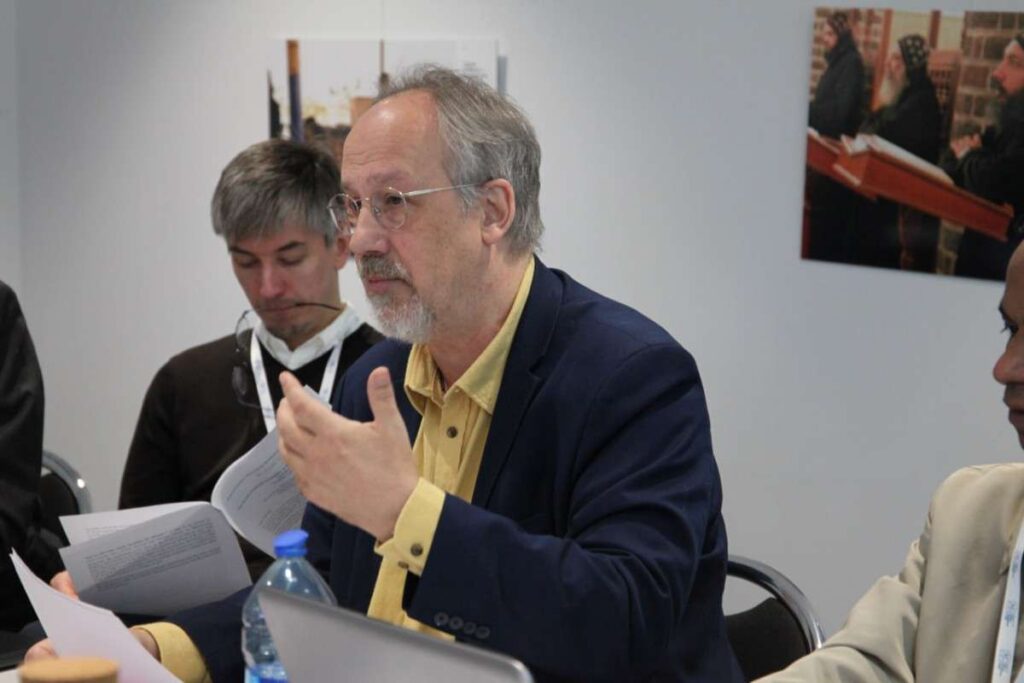
The speaker emphasized that the life of the Church cannot be reduced to universal, identical solutions “once and for all.” Ecclesial decisions must always be contextual: what is possible and fruitful in one place is not necessarily appropriate in another. Churches live in different historical, cultural, and social settings, and this calls for diverse forms of ecclesial organization and discipline. It is precisely here that the experience of the Eastern Catholic Churches can become an important service to the wider Christian world. They bear witness that unity does not mean uniformity, and that diversity of practices does not undermine the common faith. Questions such as a married clergy or the female diaconate show that the Church has historically known different solutions, and that not all of them require universal application.
The paper also highlighted the canonical experience of the Eastern Catholic Churches as a possible form of service to the Orthodox Churches. This does not concern the adoption of a Western juridical model, but rather the Eastern understanding of canon law as a means of ordering ecclesial life and safeguarding the Church’s mission. The existence of an effective canonical order ensures institutional stability, whereas its marginalization renders ecclesial life vulnerable to ad hoc decisions and external pressure. In the speaker’s view, it is precisely this combination of Eastern ecclesiology with operative canon law that the Eastern Catholic Churches can offer as their contribution to contemporary inter-church dialogue.
A common thread running through the presentations of many speakers was the idea that the Eastern Catholic Churches serve others not only through particular models or instruments, but through their historically formed identity itself. It was to this dimension – identity as a theological resource and a space of responsible ecclesial witness – that Rev. Dr. Roman Fihas turned in his paper, “The War for Identity: the Decolonial Mission of the Ukrainian Greek Catholic Church in Conditions of War.”
In his presentation, the speaker showed that historically the identity of Eastern Catholics was formed in constant tension between two different, yet interconnected, types of colonial pressure. On the one hand, there was Latinization, which often treated the Eastern tradition as secondary, immature, or in need of “correction”; on the other hand, there was Russian imperial and ecclesial policy, which viewed the very existence of the Eastern Catholic Churches as a threat to its project of total ecclesial and cultural control. In this context, communion with Rome appears not as a renunciation of Eastern identity, but as a historical means of preserving it and protecting it from imperial models of ecclesial subordination.
A distinct and decisive dimension of this identity is the experience of resistance to the violent liquidation of the Church, whose culmination in the twentieth century was the forced “reunification” with the Russian Orthodox Church in 1946. This trial radically called into question not only the institutional existence of the Church, but also its very ecclesial self-understanding. Prohibition, underground existence, and systematic repression left deep traumatic marks on ecclesial life. At the same time, this experience did not destroy ecclesial continuity: the preservation of ecclesial continuity under persecution, as well as the passage through complex and often polarized debates about identity after emerging from the underground in the 1990s, became the foundation for a theological interpretation of the underground as a source of ecclesial maturity.
It was precisely this historical school of survival and self-reflection that formed within the Church a deep moral and theological immunity to imperial religious ideologies. From this follows the main thesis of the paper: only a mature, internally articulated identity makes openness, responsibility, and the capacity for genuine dialogue possible, including in the sphere of ecumenical relations.
Russia’s war against Ukraine became a moment of truth for such dialogue, exposing the crisis of an ecumenism built around an imperial center, while at the same time opening space for an “ecumenism of action,” grounded in common service, solidarity, and responsibility. Eastern Catholic identity, shaped through experiences of persecution and theological self-reflection, does not lead to isolation, but creates the conditions for honest ecumenical cooperation, whereas an identity marked by colonial dependence remains incapable of full dialogue.
In conclusion, the paper offers a vision of Eastern Catholic identity as a responsible, decolonized, and mature form of Eastern Christianity within Catholic unity. This identity is not only an internal possession of the Church, but also a theological challenge to the wider Christian world – particularly to models of ecumenism that have until now been constructed around engagement with imperial “major players.” It is precisely here that the discussion of identity moves from an internal to an external dimension: from how the Eastern Catholic Churches themselves understand their maturity, to how this maturity is interpreted and received within Catholic unity. The question concerns the images, roles, and models by which the place of the Eastern Catholic Churches in their relationship with Rome is described. This shift of focus delineates the issues addressed in the subsequent papers.
Eastern Catholic Churches and Rome
In his paper “Maturity in Communion: the Living Identity of the Eastern Catholic Churches,” Archbishop Michel Jalakh, O.A.M. emphasizes that for a long time the identity of the Eastern Catholic Churches was shaped primarily through their function within visions of future unity, rather than through their own ecclesial self-understanding. Prior to the Second Vatican Council, they were viewed as the Christian East already in communion with Rome and thus as anticipating the hoped-for reunification with other ecclesial communities considered to be in schism. From this perspective, they were perceived as a sign of the future – as an East that had already “returned.” After the Council, this approach was replaced by the metaphor of a “bridge” between East and West. Over time, however, this metaphor also proved insufficient: the Eastern Catholic Churches increasingly began to present themselves as a practical model of what the integration of the Orthodox Churches might look like in the event of restored unity. In all of these models, the identity of Eastern Catholics was defined above all by their relationship to other Churches and to a future ecclesial unity.
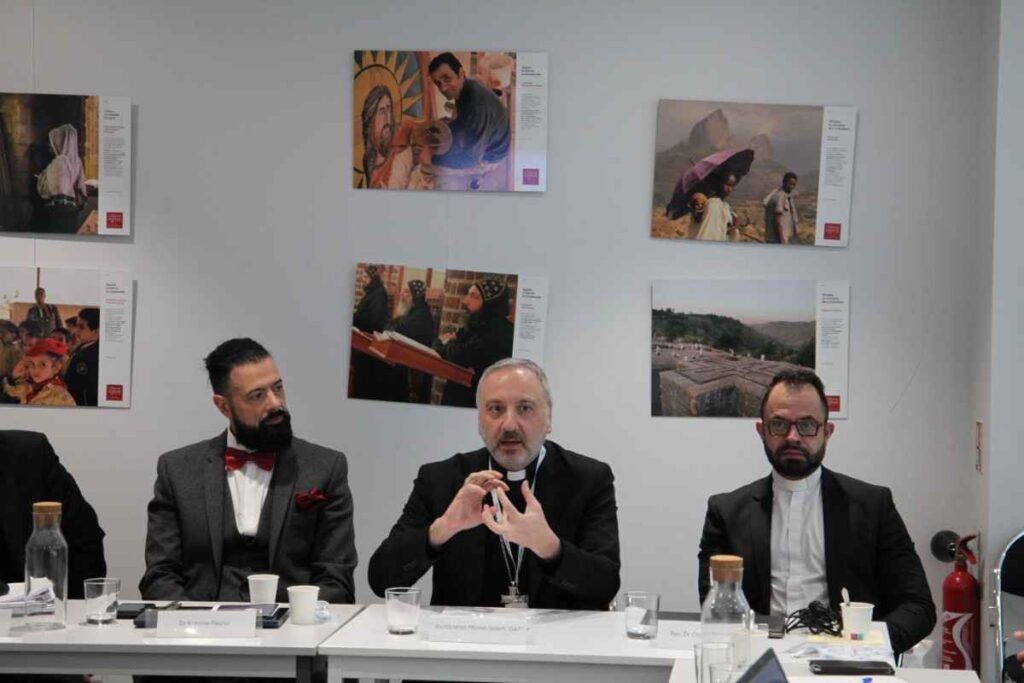
At the end of the twentieth and the beginning of the twenty-first century, according to Archbishop Jalakh, the very approach to understanding the Eastern Catholic Churches has changed: they are no longer conceived primarily through the prism of dialogue with the Orthodox, which allows them to focus on the development of their own identity and self-understanding. The defining feature of this identity remains communion with Rome. This alone constitutes a sufficient distinction of the Eastern Catholic Churches, even in cases where their liturgical, spiritual, and traditional practices fully coincide with those of the Orthodox Churches. At the same time, their existence remains structurally tense and “uncomfortable” for both the Latin and the Orthodox milieus – not because of their own choice, but as a consequence of the very fact of division between the Churches.
It is precisely in this tension that Jalakh discerns the vocation of the Eastern Catholic Churches: not to seek a stable or comfortable status within the Catholic Church, but to live in such a way that the wound of division is not silenced and becomes a constant challenge and an argument in favor of real progress toward unity. For this reason, their importance for the Church is determined not by numbers, but by the fact that through them a real, though incomplete, experience of unity is already being lived. In this way, Michel Jalakh’s paper defines the vocation of the Eastern Catholic Churches as a constant life in tension between unity already experienced and the unhealed wound of division. This vision, however, inevitably encounters a difficult question: what is the ecclesiological status of these Churches in the reality of Catholic–Orthodox dialogue, and how should their historical origin be understood? It is precisely this issue that is taken up in the subsequent paper by Taras Kurylets, which shifts the focus from the symbolic role of the Eastern Catholic Churches in the perspective of unity to a critical analysis of uniatism as a category that continues to define their place in ecumenical discussions.
Thus, in his paper “The Discussion on Uniatism through the Prism of Eastern Catholics: an Opportunity to Reflect on Their Ecclesiological Identity,” STL Taras Kurylets examines the interpretation of the phenomenon of Uniatism as a key to understanding the contemporary ecclesiological position of the Eastern Catholic Churches. He shows that in the Catholic – Orthodox dialogue this issue has been marked by a profound asymmetry from the very beginning. For the Catholic side, the existence of the Eastern Catholic Churches as a result of the unions represents a certain challenge within the Catholic – Orthodox dialogue, one that merits discussion. At the same time, for the Orthodox side, the very existence of Eastern Catholics is the primary issue that must be “resolved” before any further progress in the dialogue can take place.
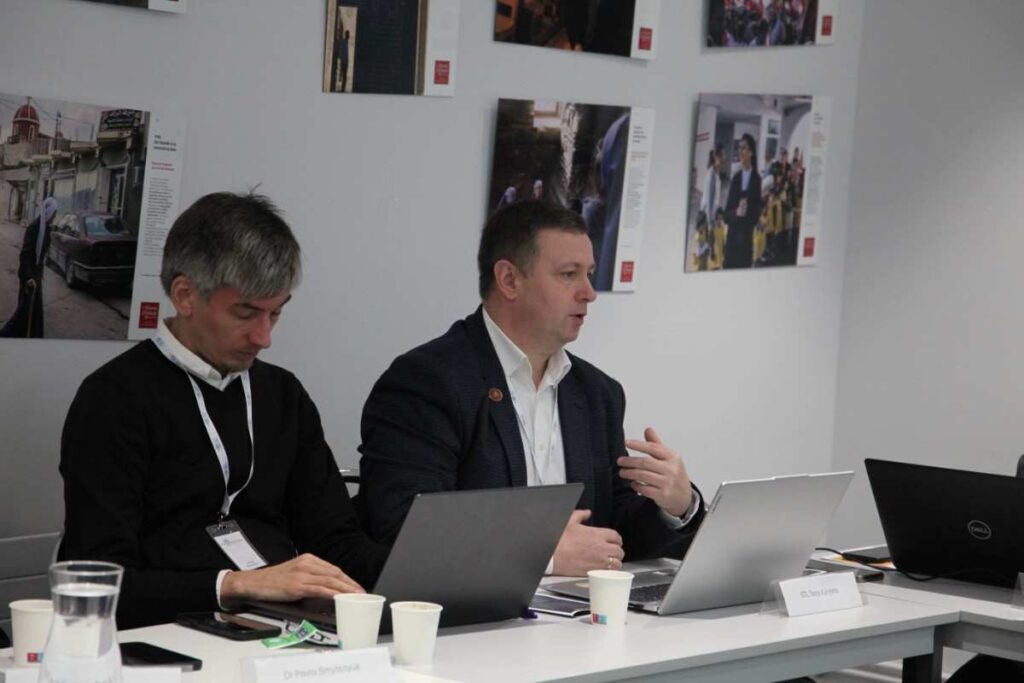
It was precisely this tension that was recorded in the documents of the official dialogue. The Freising Statement identified Eastern Catholics as an “urgent problem” that takes priority over other topics of the dialogue, while the Balamand Declaration consistently rejected uniatism not only as a method of achieving unity, but also as a model of ecclesial unity. At the same time, both documents left a fundamental question open: what should be the ecclesiological status of the Eastern Catholic Churches themselves, and what is the historical result of “uniatism”?
Kurylets devotes particular attention to the contribution of Cardinal Myroslav-Ivan Lubachivsky, who consistently distinguished between “uniatism as a method” and “uniatism as a result.” While rejecting the historical method as unacceptable, Lubachivsky simultaneously insisted that the Eastern Catholic Churches themselves cannot be regarded either as a mistake or as a temporary deviation in the history of the Church. On the contrary, they require a serious rethinking of their own ecclesiological status as full-fledged Churches in communion, rather than as a by-product of historical compromises.
The Western tradition developed a centralized, juridically constructed system in which the fullness of authority converges in Rome. The Eastern tradition, by contrast, preserved a synodal structure in which the Church is understood as a communion of local Churches headed by patriarchs. During the period of uniatism, it was the Western model that prevailed, which led to the incorporation of Eastern communities into the Catholic Church not as full ecclesial bodies, but rather as individual communities or even as individual believers. The Second Vatican Council initiated a correction of this model by recognizing the dignity of the Eastern traditions and granting the Eastern Catholic Churches limited autonomy within Catholic communion. According to Kurylets, however, this correction remained only partial and did not remove the tension between the two ecclesiological visions, a tension that continues to define the discomfort of the Eastern Catholic position.
In response to this tension, initiatives have emerged within the Eastern Catholic milieu aimed at rethinking the future: aspirations toward patriarchal status, as well as attempts to formulate the concept of dual or simultaneous communion. These initiatives did not lead to immediate structural changes, but they nevertheless became an important space for theological reflection, academic dialogue, and the awareness of one’s own ecclesial subjectivity. As a result, a discussion that began from a defensive posture and a sense of ecclesiological insufficiency has gradually been transformed into the active participation of the Eastern Catholic Churches in shaping new theological and canonical proposals. Increasingly, they appear not as objects of inter-church dialogue, but as subjects capable of responsibly reflecting on their own identity and proposing paths for the renewal of ecclesial relations, both within Catholic communion and in the broader perspective of Christian unity.
The debate on the patriarchate of the UGCC: ecclesiological, canonical, and ecumenical dimensions
In a question addressed to Archbishop Michel Jalakh, Taras Kurylets drew attention to the problem of the lack of practical implementation of the provisions of the Second Vatican Council concerning the possibility of creating new patriarchates. He asked whether there is a principled difference between so-called ancient and new patriarchates, and whether such a distinction has an ecclesiological foundation.
In response, Jalakh emphasized that the issue remains open and subject to debate. He noted that among representatives of other Eastern Catholic Churches there is a widespread conviction that the time for elevating certain Churches to patriarchal status has not yet come. At the same time, he pointed out that the very mechanism for such an elevation, as laid down in Orientalium Ecclesiarum, raises ecclesiological questions.
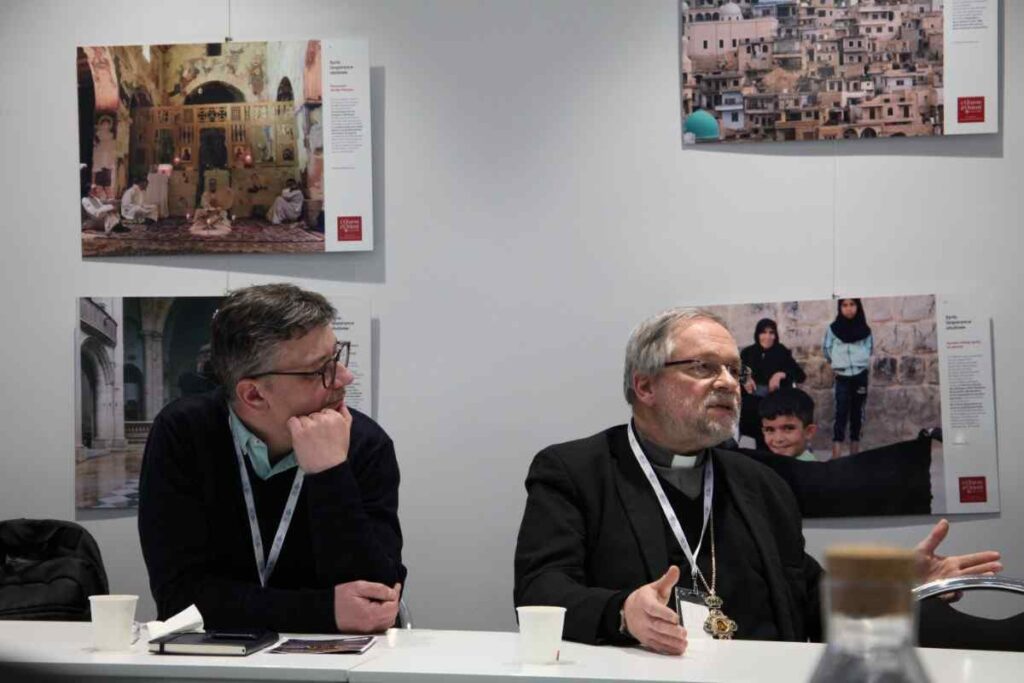
However, Bishop Hlib Lonchyna offered a critical analysis of the reasoning that repeatedly postpones the recognition of a patriarchate, emphasizing that the Eastern Catholic Churches, including the UGCC, possess fully developed synodal structures, an episcopate, and a canonical tradition. Therefore, the refusal to grant patriarchal status is problematic, especially in light of the constant calls to “return to one’s own Eastern traditions.” In this context, it was stressed that historically the arguments against a patriarchate have changed, while the outcome has remained the same – the deferral of a decision.
Participants in the discussion noted that the question of a UGCC patriarchate is often considered not only within an internal Catholic framework, but also in light of inter-church and geopolitical factors, above all in the context of Catholic–Orthodox relations. A warning was expressed that fears of “disturbing the ecumenical balance” in fact paralyze the development of the Eastern Catholic Churches and turn them into hostages of external reactions.
An important canonical emphasis was added to the discussion by Fr. Andrii Onuferko, who stressed that from the perspective of the Code of Canons of the Eastern Churches, the difference between a patriarch and a major archbishop is minimal and concerns primarily the procedure of election and confirmation. In all other respects, the UGCC already functions de facto as a patriarchal Church. Therefore, the question of a patriarchate is more symbolic, ecclesiological, and political in character than strictly juridical.
In the subsequent discussion, it was emphasized that resistance to the recognition of a patriarchate is closely linked to long-standing narratives in which the Eastern Catholic Churches are perceived as secondary or “problematic” subjects of ecclesial life. In this context, the patriarchate appears not as a demand for privilege or power, but as a form of recognition of full ecclesial subjectivity.
At the same time, Arch. Michel Jalakh cautioned against interpreting the patriarchate exclusively as a question of “dignity.” In his view, within the Catholic Church there is no hierarchy of dignity between major archiepiscopal and patriarchal Churches, and the principal concern lies in the possible consequences of such a decision for inter-church dialogue. He also drew attention to fears of creating a precedent, noting that contemporary patriarchates were historically more often recognized than “created” by a decision of the Apostolic See.
The final analytical accent was offered by Fr. Roman Fihas, who interpreted the issue of the patriarchate within a broader post-colonial perspective. According to him, contemporary ecclesiological imagination is largely shaped by relationships among the “great centers” – Rome, Constantinople, and Moscow – within which the Eastern Catholic Churches often lack a voice. Recognition of a patriarchate could become an instrument for overcoming this asymmetry, granting such Churches not dominance, but international subjectivity and the right to participate in shaping global ecclesial decisions.
Thus, the discussion of the patriarchate in these papers goes beyond a purely canonical or administrative level and increasingly emerges as a question of ecclesial dignity and subjectivity. Yet this dignity does not remain an abstract ecclesiological category; it requires concrete embodiment in ecclesial practice. For this reason, the final block of conference papers was devoted to liturgical themes in the context of ecclesial identity.
Rev. Dr. Gaby Hashem maintains that the question of the identity of the Eastern Catholic Churches remains one of the most acute in the contemporary ecumenical context. For a long time, they were perceived not as full Churches of apostolic origin, but rather as liturgical “rites,” which effectively deprived them of ecclesial subjectivity. The Second Vatican Council initiated a genuine renewal: the Eastern Catholic Churches began once again to understand themselves as Churches of apostolic origin, Eastern in tradition and at the same time in communion with Rome. Yet, according to the speaker, this process was not brought to completion. Their identity as sui iuris Churches remains ambiguous both in Catholic and Orthodox milieus, and within the Catholic Church itself there persists a latent tendency toward unification.
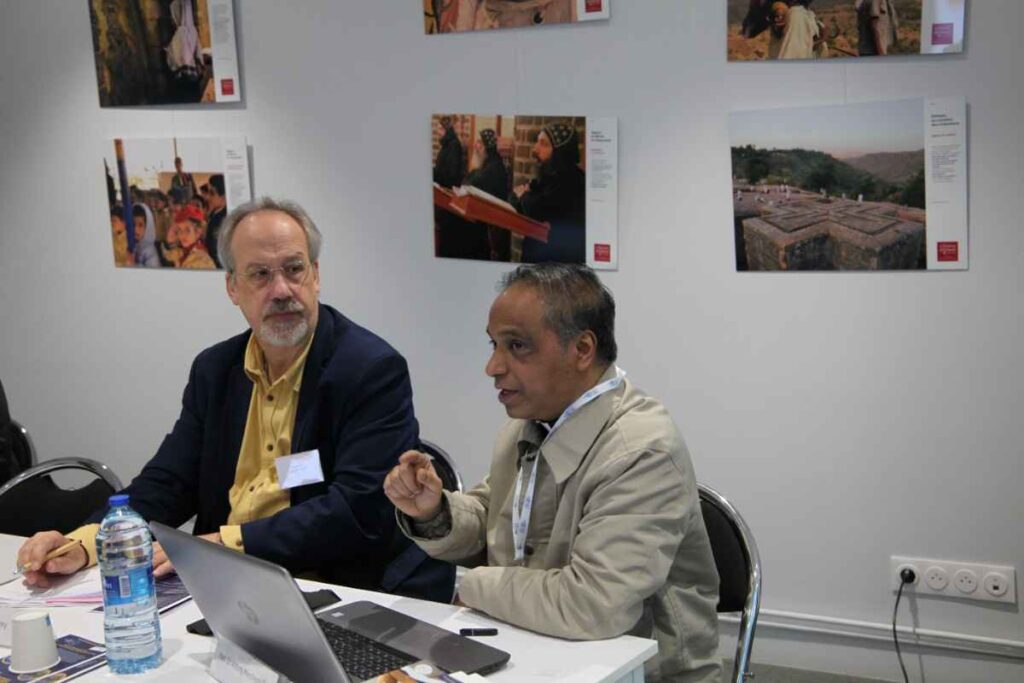
A concrete illustration of this dynamic was provided through the experience of the Syro-Malabar Church in the paper by Rev. Dr. Antony Mecherry, “The Current Repositioning of Eastern Catholics in Light of New Socio-Political Realities.” The starting thesis of his presentation was that contemporary liturgical conflicts cannot be understood outside a broader historical and theological context. Over several centuries, the Syro-Malabar Church underwent a process of Latinization. This involved not only changes in liturgical forms, but also a deeper transformation of ecclesial self-understanding. The consequence was a prolonged identity crisis which, from the late nineteenth to the mid-twentieth century, was articulated in a series of fundamental questions, among them: what is “our” rite, and what is its future?
From the 1950s onward, two parallel and increasingly conflictual trajectories of development became clearly visible within the Syro-Malabar Church. The first was a course toward liturgical de-Latinization, which was institutionally activated from 1957. Its aim was a return to pre-union traditions as a sign of authenticity, historical continuity, and a break with the colonial legacy – that is, a movement of ressourcement, a return to the sources. The speaker deliberately uses the term “liturgical de-Latinization,” emphasizing that this process concerned primarily the ritual sphere, while other dimensions of Latinization – particularly hierarchical and administrative ones – largely remained in place.
The second trajectory emerged in the context of post-conciliar processes and became especially active from 1969 onward. It was associated with the reception of the reforms of the Second Vatican Council, with wide-ranging liturgical experiments, and with the program of so-called Indianization. This direction was interpreted as an embodiment of the spirit of aggiornamento: modernization and openness to new historical and cultural conditions. It sought to adapt liturgical forms as fully as possible to the contemporary Indian context, employing the language of localization and contextualization.
The speaker proposed a theological framework built around two key concepts of the conciliar era: ressourcement and aggiornamento. By ressourcement he understands a return to the sources not as an archaeological restoration, but as a theological act of renewing a living connection with the Church’s historical memory and its own tradition. In this logic, Orientalium Ecclesiarum was often perceived as a normative mandate for restoring authentic Eastern rites and purifying them of Latin accretions. In the Syro-Malabar context, this reading directly supported the program of liturgical de-Latinization. By contrast, aggiornamento was linked to another conciliar impulse – the desire to make ecclesial life intelligible and meaningful in the modern world. Sacrosanctum Concilium was frequently read as a theological justification for the dynamic renewal of the Liturgy, openness to experimentation, and deep cultural adaptation. It was precisely this logic that underpinned post-conciliar reforms and “Indianization,” which were understood as a forward movement toward the contextual rooting of worship in the life of India.
According to the speaker, the central problem lay not in these principles themselves, but in their separation. Ressourcement and aggiornamento began to function not as complementary dimensions of a single process of ecclesial development, but as alternatives set in opposition to one another. Accordingly, Orientalium Ecclesiarum and Sacrosanctum Concilium were read in isolation and used to justify mutually exclusive reform agendas. As a result, the movement “backward” – toward the sources – risked turning into a rigid restoration, while the movement “forward” – toward inculturation – risked losing its own heritage. The speaker argues that a way out of these tensions is possible only through a holistic hermeneutic that integrates ressourcement and aggiornamento, historical memory and contemporary challenges.
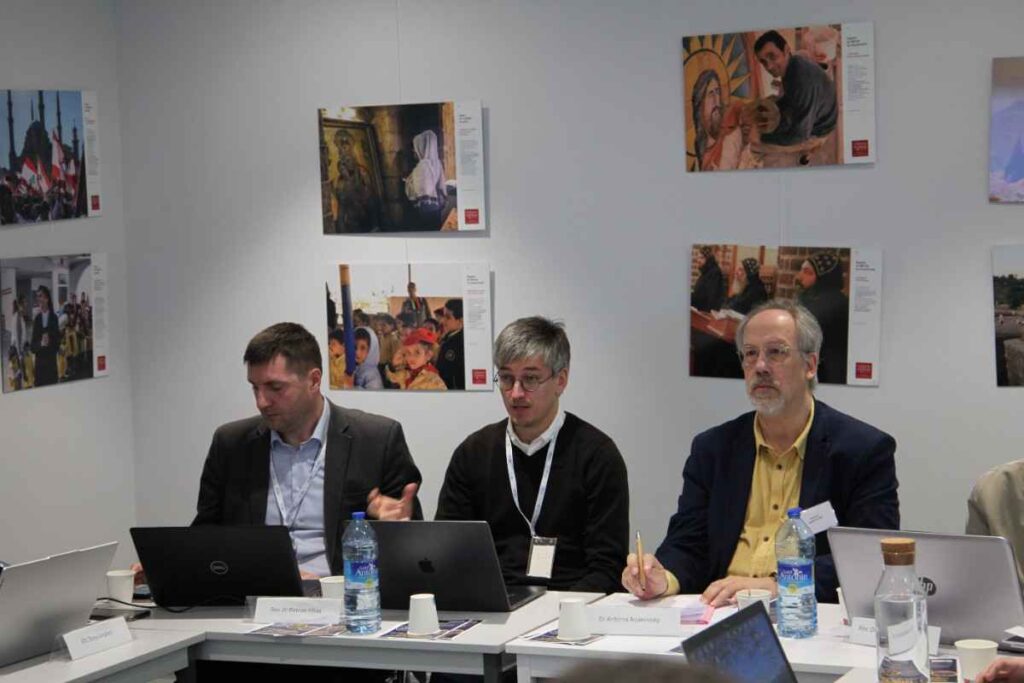
The theme of tension between “returning to the sources” and responding to contemporary challenges was further developed by Dr. Pavlo Smytsnyuk in his paper, “The Theopolitical Consequences of a Focus on Particularity: the Eastern Catholic Churches in Times of Crisis.” The speaker emphasized that an appeal to tradition and authentic heritage does not necessarily imply conservatism or a flight into the past, but can serve as a means of offering a relevant response to present-day challenges.
To illustrate this thesis, he cited examples of national projects in which innovations are often legitimized through appeals to imagined golden ages or ancient models presented as requiring restoration. In this sense, the Second Vatican Council appears as a radically innovative project realized through a return to early – and at times even constructed – tradition.
At the same time, the logic of ressourcement can assume problematic forms. In particular, this concerns the desire to be “no less Eastern than others” and not to concede the Orthodox in symbolic “ownership of tradition.” Behind this often lies an inferiority complex – a tacit assumption that the Orthodox Churches are the sole legitimate bearers of authentic Eastern tradition, while Eastern Catholics supposedly lack the right to make changes without the conditional permission of this imagined owner.
An example of this dynamic can be seen in the guidelines of the Apostolic See for the preparation of liturgical books and translations with reference to Orthodox practice. These guidelines are important and historically justified, especially in light of the experience of Latinization. However, their unconditional and mechanical application entails the risk of fixing tradition in a static form and paralyzing its internal dynamism. In such a situation, Greek Catholics, in their effort to “preserve” tradition, may lose creative freedom, while the Orthodox Churches – confident in their legitimacy and ownership of tradition – permit themselves far bolder pastoral and disciplinary decisions.
The experience of the COVID-19 pandemic proved illustrative in this regard: in many parishes of the Ukrainian Greek Catholic Church it revealed limited creativity in adapting liturgical practice to new conditions, particularly in the manner of administering the Eucharist, when compared with the experience of Orthodox Churches of the same rite, especially in Europe and North America. An equally telling example is the decision of the Ecumenical Patriarchate to permit remarriage after ordination—evidence that a local Church can feel sufficient freedom to reconsider even millennia-old practice in light of new understandings of vocation, compassion, family values, and pastoral needs. In this context, questions arise: is the concept of “returning to tradition,” taken in isolation, itself problematic, or is it rather the interpretation that has taken shape among Eastern Catholics? Might the source of tension lie not so much in tradition itself as in a way of interpreting it that restricts the perception of tradition as a living, dynamic, and creatively open reality?
Conclusions
Throughout the conference, a common intuition repeatedly emerged: today, the identity of the Eastern Catholic Churches is formed not through self-enclosure, nor through external “protectorates,” but through the responsible presence of a minority capable of simultaneously maintaining ties with mother centers, enduring complex diasporic realities, and offering the wider Church its own resources – synodal experience, canonical culture, theological sensitivity to context, and a postcolonial immunity to imperial models of ecclesial life. For this reason, the tension between “preservation” and “renewal,” between local tradition and transnational mission, is not a sign of weakness, but rather the space in which maturity takes shape and new forms of service emerge, both within Catholic communion and beyond it.
The Institute of Ecumenical Studies plans to hold the next conference with representatives of the Eastern Catholic Churches in 2026, focusing directly on liturgical issues. The discussions have shown that contemporary liturgical tensions cannot be adequately understood outside the broader historical and theological context of Latinization and postcolonial processes in Eastern Catholicism. A way out of these conflicts is possible only through a holistic hermeneutic that regards the return to the sources (ressourcement) and renewal (aggiornamento) not as incompatible strategies, but as interconnected and necessary dimensions of a single process of ecclesial development.
In this context, particular attention must be given to the question of creative responsibility within tradition: whether the Greek Catholic Churches are capable not only of preserving inherited liturgical forms, but also of undertaking thoughtful, theologically grounded renewal without losing continuity. At the same time, the ecumenical dimension of this issue comes to the fore – the possibility for the Eastern Catholic Churches to act as equal interlocutors with the Orthodox Churches, sharing their own experience of preserving and reinterpreting the liturgical heritage.
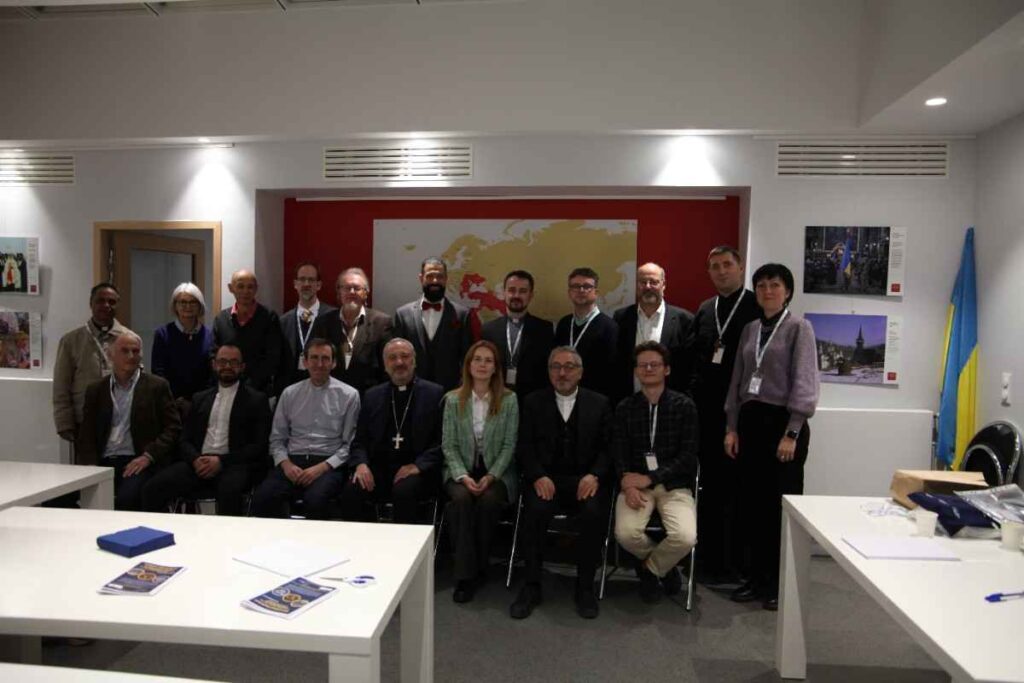
The Institute of Ecumenical Studies extends its special thanks to Jérôme Dartiguenave, chargé de mission of the Institut chrétiens d’Orient and l’Œuvre d’Orient, as well as to the entire team, for their assistance in organizing the conference.
Eduard Berdnyk

