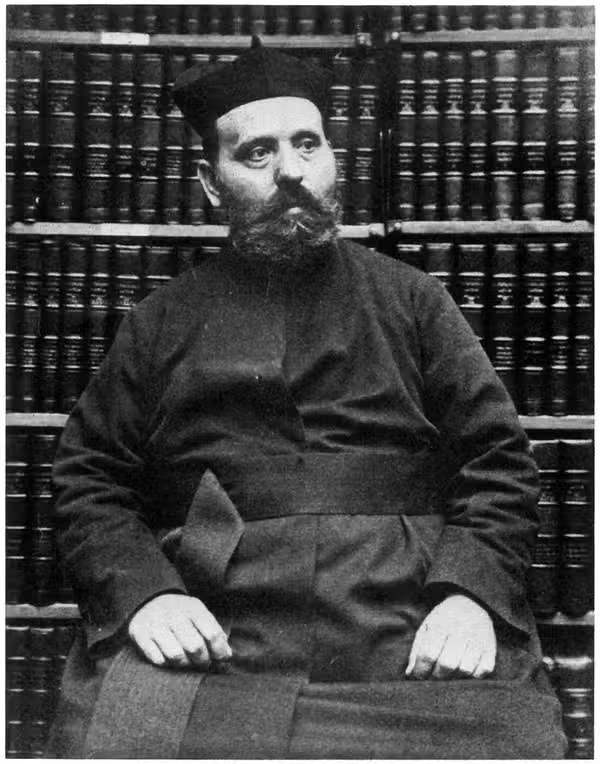
Next year marks the one hundredth anniversary of the death of Fr. Heinrich Pesch, S.J. Though his is not a well-known name, Fr. Pesch is probably the greatest Catholic economist who ever lived, one who set forth in a series of massive scholarly tomes an economic system based on the Church’s own social teachings, a system he called Solidarism, and which was used by subsequent pontiffs, including Pius XI in his 1931 encyclical Quadragesimo Anno and John Paul II in his own social encyclicals.
It is well-known that beginning with Leo XIII’s Rerum Novarum of 1891 the popes increasingly turned their attention to the rapidly changing economic situation in Europe and elsewhere. Although St. Thomas Aquinas himself, as well as many other earlier writers, had addressed questions of economic morality, the economies of their times were very different from the industrial capitalism spreading over all of Europe during the nineteenth century. Hence the need for renewed attention to the numerous ethical questions raised by these new historical circumstances.
Heinrich Pesch as a young seminarian spent the years 1885 to 1888 near Liverpool in England because Bismarck’s Kulturkampf had driven religious orders out of Germany. In England Pesch witnessed the exploitation and degradation of the working class under industrial capitalism which made him resolve to devote his life as a priest to the social apostolate. He later studied economics at the University of Berlin and his chief work on economics and the social question was his monumental Lehrbuch der Nationalökonomie, setting forth the basics of Solidarism, which appeared in five volumes between 1905 and 1923.
The socio-economic situation that Fr. Pesch addressed was unique in history in that the classical liberalism that stood behind capitalism saw the economic order as divorced from a place in the hierarchy of values that had hitherto been understood as the organizing principle of social life as a whole. Economic life, and consequently greed for gain, unconnected from any inherent end, were now seen as legitimate and free from all but the most rudimentary ethical restraints. Prohibitions against force and fraud, narrowly defined, were pretty much the only misdeeds which the apologists of the new order recognized.
Solidarism, on the other hand, as rooted in Catholic social thought, perceived that the economy must serve mankind as a whole and that economic activity is naturally part of the hierarchy of human goods, not an independent thing divorced from a place in social life, something to be pursued according to the wishes and skill of each individual economic actor motivated solely by a desire for unrestricted gain. Pesch stated this principle at the outset of the Lehrbuch, when he wrote that “man must always and everywhere be the subject and end of the economy”1. He went on to say,
“Considered overall, solidarism is the social system which brings to proper expression the solidaristic bond among people as such and as members of the natural communities – the family and the state – i. e., in accordance with the specific nature of each community. At the same time it encourages the fullest possible development of cooperative, representative, and corporative associations according to occupation and stations-in-life, as adapted to given historical circumstances, on the firm basis of a community of interests and in a proper juridical form. Considered in the broadest terms possible, the essential meaning of the solidarist system consists in complementing weakness and regulating power by binding people together in solidarity, while exercising mutual consideration and concern in accordance with the demands of justice and charity, by a well-ordered cooperation and reciprocity within the various forms of natural and free, public and private communities, and in accordance with their natural and historical peculiarities, directed toward the ultimate goal of securing the true welfare of everyone involved”2
As such, Pesch did not look on society as akin to a machine or to a physical organism, but as a moral organism.
The concept of physical organism, in any case, allows the individuals to appear to be “organs which are subservient to the life of the social body,” like the “cells in the life of the physical body.” The concept of moral organism, on the other hand, employs only an analogy between the physical structure and the social structure. Thus, the members of the social structure remain individuals who have their own ends as human individuals not merely with regard to the life in the hereafter, where earthly social structures will not be present in any case, but precisely for and within the social structures3.
Just as members of a family naturally will cooperate with each other, and just as citizens of the same community will tend to create institutions and undertakings for mutual assistance, so those who work in the same firm or industry have common interests and naturally share a common task in the provision of a particular economic good or service for society. As a result, according to Pesch, they constitute the natural basis for the formal establishment of occupational groups or guilds which will be involved in setting prices, wages, regulating product quality and in many other kinds of economic regulation which today are either done directly by the government, or not at all. Further they would collaborate to solve problems internal to the industry, such as industry-wide collective labor agreements, safety standards, negotiations for contracts with suppliers of raw materials, and, much as a modern trade association, they would manage relations with the government and the general public, working both for their own legitimate prosperity and for the public good.
It will be clear from what I just said that Pesch, and the system of Solidarism, insists on the role of ethics in economics.
“Though economics has its own formal object – satisfying men’s wants with limited means – its material object, man, is shared with the ethician [sic] among others. Economists can no more ignore ethical principles with regard to economizing man than it can ignore the principles of physiology4.
After considering these general features of the solidaristic system of economics, let us look at some of its specifics. With reference to the important question of property Pesch wrote, “Of the utmost importance, however, is the need to do away with the individualistic concept of private property, and the refinement of the institution of private property by the introduction of the social perspective”5. Thus,
“…property is not an end in itself… but it is only a means designed to provide for mankind in a manner appropriate for the well-being of the individual, the family, and political society. This purpose of private ownership gives rise to appropriate limits to the acquisition, expansion, and the use of property, and also to foregoing its use”6.
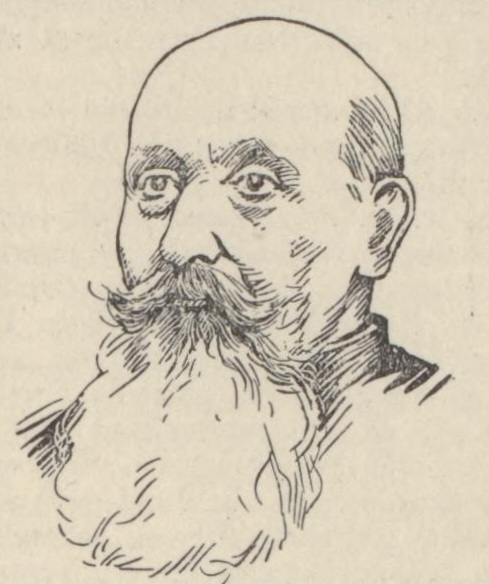
Pesch roots private property in man’s “rational nature…[which] found the kind of order which was most in harmony with his human nature and with the needs of social order and cultural development”7. This right to property, however, is necessarily subject to the demands of solidaristic unity. It is shaped by legal, historical and cultural factors, and especially “brings with it moral and social obligations” and therefore must be “subordinated to serving the needs of all of the people”8. This is exactly what St. Thomas taught, and Pesch notes that Leo XIII quoted Thomas to the effect that “A man ought to regard external things not as belonging to himself, but as a common good which he owns along with others, inasmuch as he ought to be prepared to share with those who are in need”. And, he continues, it is not just needy individuals who have a kind of claim on one’s property, but “the use of property must be tailored to the requirements of the common good of the political community…. That is why the free enterprise concept of an absolute private property right is out of order”9. As John Paul II noted in Centesimus Annus, referring to Leo XIII’s Rerum Novarum, “The Pope is well aware that private property is not an absolute value, nor does he fail to proclaim the necessary complementary principles, such as the universal destination of the earth’s goods” (no. 6).
One of the most interesting and original of Fr. Pesch’s contributions to economics is his analysis of the just wage as “the economically correct wage.” He notes: “The capacity to work is a natural good of man, which is destined and therefore also empowered by nature, or by the Author of nature, to provide the worker with his necessary sustenance”10. Hence, man’s work does not “have only the natural destiny to acquire for the worker his subsistence…. It also has the natural capacity to do so”11. In other words, a normal adult worker, with access to adequate raw materials and tools or machines, is capable of procuring his own sustenance, and even beyond that, the sustenance of a family. But with regard to workers who are employed by others, what should we think of cases where workers appear incapable of producing such sustenance, of creating economic values that justify a proper livelihood? Whose fault is it? And what are the remedies?
The employer who, by his own ineptitude, uses labor in such a way that it does not come up to doing what it is capable of doing, would nevertheless be required to pay the kind of wage which labor is intended to provide. However, if labor is utilized properly in accordance with its natural purpose, and the employer pays a wage which does not provide for labor’s livelihood, then he violates commutative justice. Finally, an industry which, even under normal circumstances is not in a position to pay wages corresponding to what wages are supposed to accomplish, is lacking in economic justification. This means that the requisite consumer demand is lacking, and such an industry no longer has a place in the pattern of satisfying normal human wants12.
In this last case, employers are able to sell their products or services only by withholding the requisite economic return from their workers. Although such an employer would never consider shortchanging his suppliers or his landlord, he perceives no wrong in doing so to his employees. But there is no reason, either ethically or economically, why this is justified. Workers are the most important contributors to the success of an enterprise, and if an owner is unable to pay them what they deserve, then both morally and economically he has no right to continue his business. For the sale of the final product must compensate justly all those who have contributed to its production.
Solidarism is an elaborate and sophisticated approach to economics which sadly is little known today, even among those interested in the social doctrine of the Church. But there is another economic system, similar in many ways to Solidarism, which has attracted some attention in the last several decades, both in North America and Europe. This is Distributism, best known through the writings of two of its outstanding original exponents, Hilaire Belloc (1870–1953) and G. K. Chesterton (1874–1936). Although both Chesterton and Belloc were public intellectuals, widely read in many branches of thought, and Belloc was a history graduate of Oxford University, unlike Heinrich Pesch neither was a trained economist, and neither produced anything comparable to Pesch’s scholarly economic writings. In addition to a multiplicity of articles, Chesterton’s social thought is chiefly contained in three books, What’s Wrong With the World (1910), Utopia of Usurers and Other Essays (1917), both written before his reception into the Catholic Church, and The Outline of Sanity (1926). Belloc’s chief contributions to distributist thought were The Servile State (1913), Economics for Helen (1924), and The Restoration of Property (1936), this last being a sketch of how a distributist economy might be established.
Distributism champions widely distributed private property, but if one were to compare Solidarism and Distributism he would find many similarities and discover that the differences between them are frequently merely a matter of emphasis. As such, they both witness to the fact that all serious attempts to apply Catholic social doctrine will necessarily resemble each other much more than they will differ. Both Solidarism and Distributism could find their fundamental ideas in Pope Leo’s Rerum Novarum, Solidarism in the passage “capital cannot do without labor nor labor without capital,” (no. 19), and Distributism in the passage, “The law, therefore, should favor ownership, and its policy should be to induce as many people as possible to become owners” (no. 46). But just as there was no contradiction in the mind of Leo XIII who wrote both these statements, so there is little contradiction in the fundamental thought of Pesch on the one hand, and of Belloc and Chesterton on the other. In fact, there is a clear convergence with regard to how both systems treat important economic points, such as property or employment and wages. If we compare the two systems on a few key points we will see that this is so.
Although the original distributists placed great emphasis on widely-distributed private property and the freedom which property ownership affords to families, the distributist understanding of property is fundamentally the same as that of Pesch. The limits on private property for the sake of the common good which Belloc and Chesterton, as well as contemporary distributists, have championed, presuppose that property ownership is a right only when it is consistent with the common good. Property has a purpose, the support and sustenance of families and individuals, and indirectly of the whole society; it is not a free-standing right to acquire as much as possible with no reference to the common good. Because of this understanding, distributists have suggested a variety of means to break up large concentrations of property, such as Hilaire Belloc’s suggestion of using graduated taxation to force the division of large concentrations of property13. And of course this is hardly alien to Pesch’s thought. There are in fact passages in Pesch which could have come from the pen of Belloc or Chesterton: “While socialism calls for the abolition of private ownership of the means of production, the motto of solidarism is: increase the number of owners!”14
Another crucial point where the two systems can be compared is the question of employment and wages. Here Pesch considered that for the most part the employer/employee relationship would continue even in a just economy. He was concerned to insure that workers received a just wage and that owners and workers were bound together in solidarity, both in spirit and in concrete institutions such as occupational groups or guilds which were to embody the spirit of justice and charity. Belloc and Chesterton, for their part, often seemed to speak as if they thought that every worker would become an owner, so that the owner/worker relationship would disappear. As we saw above, Pesch could go so far as to say that “the motto of solidarism is: increase the number of owners!” But on the other hand, Chesterton and Belloc both recognized that it was impossible to do away entirely with large entities requiring numerous workers and large capital investment. In The Outline of Sanity, when Chesterton wrote about possible means for achieving a distributist economy, he included “the gradual extension of profit-sharing [or] the management of every business…by a guild or group….”15 Neither he nor Belloc were absolutists in insisting that every individual or family must own its own farm or small business.
The central place of such occupational groups or guilds in papal social thought and in Solidarism is well-known, but less well-known is that they were seen by Belloc and Chesterton as important parts of their own program. In addition to the lines I just quoted from Chesterton, Belloc wrote,
“The safeguarding of the small unit, the seedlings of re-afforestation, the delicate experiments in the reconstruction of property, must take the form of the Guild: not the unprotected guild arising spontaneously (for that would soon be killed by the predatory capitalism around it) but of the Guild chartered and established by positive law”16.
He discusses also the possibility “of chartering … trade unions,” that is, of conferring official powers on them so they could “regulate wages, consider the opportunities of employment, prevent their function from being swamped with numbers and in general substitute status and order for chaotic competition,” as a prelude to setting up formal occupational groups17. The reader will see that not only the existence but the functions of such organizations, as conceived by both Pesch and Belloc are similar, and that no one can accuse the distributists of being hostile to the guild-principle.
One can easily perceive that the two major attempts to flesh out the fundamental principles of Catholic social thought as contained in the papal social encyclicals result in very similar systems. In fact, all attempts to construct a system which takes the Church’s social doctrine seriously will necessarily exhibit many more similarities than differences with each other and as a result make clear that social doctrine does have a solid content which translates into real world economic institutions and policies.
Catholic social teaching is not something on the peripheries of the Church’s doctrine. For if Catholic thought is to have reference to anything beyond individual and personal morality, it must face the problems and difficulties that are inherent in man’s social nature and the communities and societies that result from it. But happily the Church does have a sophisticated set of teachings for this sphere of human life. We do not need to invent or discover something anew. It is simply up to us to digest these teachings and work, as far as we can, to make them a reality in this world.
Thomas Storck
- vol. I, book 1, p. 18. All references to Pesch are to the Lehrbuch der Nationalökonomie/Teaching Guide to Economics, translated by the late Rupert Ederer (Lewiston, N.Y.: Edwin Mellen Press, c. 2002). Emphases are as in the original throughout. Edwin Mellen also publishes Pesch’s Liberalism, Socialism and Christian Social Order, as translated by Rupert Ederer. A one-volume edition of excerpts from the Lehrbuch, edited by Dr. Ederer, is available from University Press of America. In addition IHS Press publishes Pesch’s Ethics and the National Economy and a generous selection of works of Chesterton, Belloc and other early distributists. Chesterton’s distributist works are also available from Ignatius Press.
- vol. I, bk. 2, p. 221.
- Ibid., p. 234.
- Rupert Ederer, “Pesch and Solidarism: an Ethical Economic System,” paper delivered at the Western Economic Association Annual Conference, Honolulu, Hawaii, June 22, 1978. p. 11.
- vol. II, bk. 1, p. 264.
- vol. I, bk. 1, p. 277. In this context, according to the German original, the word “forgoing” would be more appropriate. – Editorial note.
- vol. II, bk. 1, p. 264.
- Ibid., p. 265.
- vol. II, bk. 1, p. 266.
- vol. V, book, 2, p. 86.
- vol. V, book, 2, p. 90.
- vol. V, book, 2, p. 90.
- See Belloc’s The Restoration of Property (New York: Sheed & Ward, [1936] 1946), especially pp. 69–72, 93–118.
- vol. IV, bk. 2, p. 299.
- In The Collected Works of G. K. Chesterton, vol. 5, Ignatius Press, 1987, p. 97. Belloc in The Restoration of Property makes similar proposals. See p. 88.
- The Restoration of Property, p. 136. Emphasis in original.
- Ibid., pp. 139–140.

